Market Analysis & Updates
Dubai Metro Blue Line Progress Update (Nov 2025–Feb 2026): Where Property Demand Could Shift Next—and How to Invest Early
Florian
•February 19, 2026
Dubai’s next big “location re-rating” story isn’t a new tower launch—it’s infrastructure. With the Dubai Metro Blue Line now actively progressing (and specific station corridors publicly confirmed), buyers and investors are starting to price in a future where today’s car-dependent districts become tomorrow’s metro-connected neighborhoods.
This matters because Dubai’s market is increasingly efficient: once a corridor becomes obvious, the best-priced inventory (and best tenant profiles) get absorbed first. Below is a practical, real-estate-first breakdown of what’s been announced recently, which areas are most exposed to the Blue Line upside, and how to position your next purchase or lease decision.
What’s new in the last 90 days: the Blue Line is moving from “plan” to “progress”
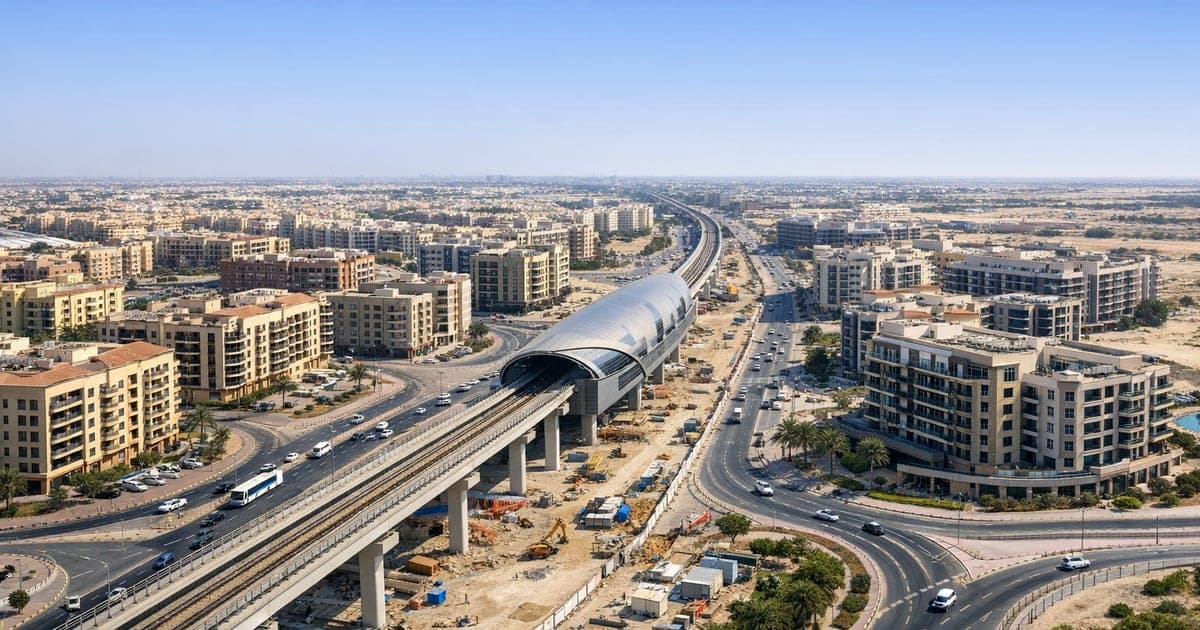
In a recent update, Dubai’s RTA reported 10% construction progress on the Metro Blue Line and reiterated key project fundamentals: 30 km, 14 stations, connections to the existing Red and Green lines, and a route that runs through multiple residential and employment-linked districts. The same update also highlighted a key real estate takeaway: property values around Metro stations could be boosted by up to 25% over time (a projection tied to transit-oriented development effects).
For property decisions, the “hot topic” isn’t the 2029 opening date—it’s the multi-year window where pricing resets unevenly across submarkets as infrastructure becomes more certain.
Blue Line corridor map (in plain English): the communities most likely to feel it first
Based on the published alignment, the Blue Line creates two major spines: one linking Al Jaddaf through Dubai Festival City, Dubai Creek Harbour, Ras Al Khor and into International City, then onward to Dubai Silicon Oasis and Dubai Academic City; and another linking from Centrepoint (Red Line) through Mirdif and Al Warqa to connect at International City.
That corridor matters because it touches three high-intent buyer segments:
- Budget-to-mid renters who want lower rents but better commuting options (International City, Al Warqa, parts of Mirdif).
- End-users who want family housing with future-proof connectivity (Mirdif, Al Warqa, Creek Harbour growth belt).
- Yield investors targeting tenant liquidity and exit liquidity (areas that become “easy to rent” and “easy to resell”).
The “metro premium” in Dubai: how to evaluate it without overpaying
Metro proximity can lift demand—but not every building near a future station performs equally. Use this quick screening logic before you buy:
- Walkability beats “nearby on a map”: prioritize properties that are realistically walkable (or have a direct feeder bus route) versus those separated by highways/industrial buffers.
- Tenant profile fit: studios and 1-beds often capture the first wave of metro-driven rental demand, but family-sized units can outperform later if the area gains schools, retail, and parks.
- Noise/traffic trade-off: some station-adjacent plots get more road activity; balance convenience with livability.
- Service charges and net yield: a “metro story” doesn’t fix a high service-charge building. Underwrite net ROI, not just gross rent.
- Exit liquidity: choose projects with strong resale volume history (or a clear reason resale will improve, such as new connectivity).
Where demand could shift: practical neighborhood insights for buyers, renters, and investors
International City (and the wider International City/Warsan cluster) is a classic example of a price-sensitive market where connectivity can change perception. If your goal is affordable entry price + future tenant liquidity, this corridor is worth watching closely—especially around the interchange dynamics.
Dubai Silicon Oasis has already been highlighted in market commentary as a district seeing renewed attention after Blue Line momentum. For investors, the play is often mid-market rentals with professional tenants (tech/education-linked) and longer average tenancy.
Mirdif and Al Warqa are more “end-user” by nature—family-oriented, lower-rise, and historically car-dependent. Metro access can increase desirability, but price moves may be steadier rather than spiky. For buyers, the strategic angle is lifestyle + future connectivity, not just a quick flip.
Dubai Creek Harbour / Dubai Festival City / Al Jaddaf connectivity belt sits closer to established demand nodes, which can support both resale liquidity and rental competition. Here, be strict on unit view, layout efficiency, and building quality—because supply and pricing can vary widely within a few blocks.
Actionable tips: how to position your next move (buy, rent, or invest) in 2026
If you’re buying to live in Dubai:
- Lock in the lifestyle first: pick the community you’d still enjoy even if the station takes longer than expected.
- Negotiate on certainty gaps: in areas where the “metro premium” is already being marketed, push for better terms (price, payment plan, upgrades, or DLD/broker fee support where applicable).
If you’re investing for yield:
- Target tenant liquidity: prioritize unit types that rent fastest in that district (often studios/1BR near transit and employment).
- Underwrite conservative rent growth: assume modest increases and let upside be upside—especially if the market is maturing.
- Plan your exit window: many investors aim to hold through key construction milestones (not just the opening date) when buyer confidence steps up.
If you’re renting and deciding whether to renew or relocate:
- Map your commute now: if your job corridor aligns with future stations, relocating earlier can mean better pricing before demand surges.
- Ask landlords about renewal flexibility: in “future metro” zones, some landlords will test higher renewals—counter with comparable listings and building quality arguments.
Conclusion: why BrokeryHero clients should treat the Blue Line as a strategy, not a headline
Dubai’s Metro Blue Line is a live, under-construction catalyst that can reshape where renters want to live and where investors can still find mispriced value. The opportunity isn’t just “buy near a station”—it’s buying the right building, with the right tenant profile, in the right micro-location, before the market fully reprices the corridor.
If you want a short list of Blue Line-exposed communities matched to your budget and goal (end-use vs yield vs appreciation), BrokeryHero can help you compare options with a practical, numbers-first approach.
Stay in the loop
Get the latest articles delivered every week.
By subscribing, you agree to receive blog updates. Unsubscribe anytime.
More from this category
Oct 5, 2026
Oct 2, 2026

Sep 30, 2026

Sep 28, 2026
Sep 25, 2026
Sep 23, 2026
Sep 21, 2026
Sep 18, 2026
Sep 16, 2026
Sep 14, 2026