
Market Analysis & Updates
Dubai’s New Advertiser Permit (Feb 1, 2026) + Trakheesi QR Codes: How to Spot Legit Listings and Buy/Rent Safer
Florian
•February 25, 2026
Dubai property demand is strong in 2026—but so is the risk of time-wasting (or worse) from fake, duplicated, or non-compliant listings. A timely shift is happening right now: the UAE’s Advertiser Permit requirement took effect on February 1, 2026, and Dubai’s property advertising ecosystem continues to tighten around Trakheesi permits and Madmoun QR verification.
If you’re buying, renting, or investing, this isn’t “marketing industry news.” It directly affects how quickly you can find real inventory, how much leverage you have in negotiations, and how safely you can transact.
What changed on Feb 1, 2026 (and why property seekers should care)
As of February 1, 2026, the UAE requires many individuals who publish promotional content online (including on social media) to hold a valid Advertiser Permit. The rule applies broadly to promotional content—often including both paid and unpaid promotions—depending on how the content is classified and distributed.
Why it matters for buyers and tenants: you should expect fewer “random DM deals” and more accountability from the people pushing listings online. Over time, this should reduce misleading ads and improve traceability when something looks suspicious.
Dubai’s “legit listing” stack: Trakheesi permit + Madmoun QR code
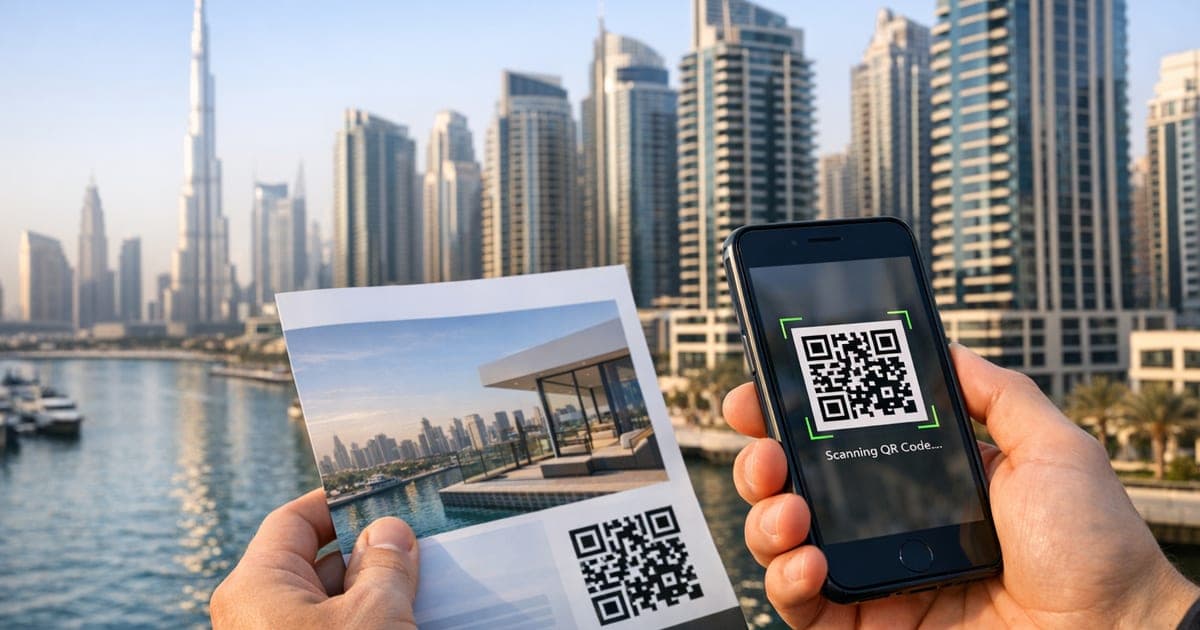
Dubai Land Department (DLD), via RERA, has long required ad permits through Trakheesi for many types of property advertising. In addition, DLD introduced Madmoun, a QR-code-based verification layer that allows the public to check whether an ad is valid and approved.
Practical impact: when you see a listing (online or offline), the presence of a working QR code and permit details is a fast signal that the ad was issued through the official pathway—reducing the odds you’re dealing with a fabricated unit, a “bait-and-switch,” or a listing that’s already gone.
How to verify a Dubai property ad in under 60 seconds
Use this quick checklist before you share documents, pay a booking fee, or even schedule multiple viewings.
- Look for a QR code on the ad (Madmoun).
- Scan the QR code and confirm it resolves to official ad details (not a random image or broken link).
- Check the permit context: does the property type, location, and status match what the agent is claiming?
- Ask for the Trakheesi permit number (especially if the ad is reposted on social media).
- Be cautious with “too good to be true” pricing—fake listings often anchor you with an unrealistic deal, then pivot you to a different unit.
What this means for buyers: cleaner comps, faster closings, fewer surprises
For buyers, higher ad compliance can improve the quality of market information you’re using to make decisions. When listings are more verifiable, you get:
- Cleaner comparable sales/rent signals (less noise from fake inventory).
- Less negotiation whiplash caused by discovering the unit was never available.
- More confidence in agent selection—serious agents will proactively show permit/verification details.
Actionable tip: when you shortlist properties, prioritize listings that are verifiable and professionally documented. In competitive submarkets, speed matters—but verified speed is better than rushed risk.
What this means for tenants: fewer “ghost listings” and stronger renewal planning
Tenants often suffer most from duplicated inventory and “marketing-first” listings that don’t reflect reality. A stricter advertising environment should gradually reduce:
- Ghost listings used to generate leads.
- Misrepresented unit specs (views, layouts, chiller, parking, building quality).
- Last-minute availability surprises that force rushed decisions.
Actionable tip: before paying any holding deposit, ask for written clarity on unit availability date, total move-in costs, and what happens if the unit can’t be delivered as described.
How to use this shift to choose the right agent (and avoid the wrong one)
In 2026, the best agents will treat compliance as part of client service—not as an inconvenience.
- Green flags: shares QR/permit details without being asked; provides accurate status updates; removes stale inventory quickly; uses clear, consistent documentation.
- Red flags: refuses to share permit/verification details; pushes urgency without proof; asks for upfront payments before basic verification; advertises “exclusive” deals with no traceable paperwork.
BrokeryHero tip: ask your agent to walk you through verification on the first call. The way they respond tells you a lot about how the rest of the transaction will go.
Conclusion: The February 2026 shift toward stricter digital advertising accountability—paired with Dubai’s Trakheesi + Madmoun QR verification—pushes the market toward fewer fake listings and more trustworthy discovery. If you want to buy, rent, or invest with less friction, build verification into your process from day one. BrokeryHero can help you shortlist verified opportunities, compare neighborhoods, and move forward with confidence.
Stay in the loop
Get the latest articles delivered every week.
By subscribing, you agree to receive blog updates. Unsubscribe anytime.
More from this category
Oct 7, 2026

Oct 5, 2026

Oct 2, 2026

Sep 30, 2026

Sep 28, 2026
Sep 21, 2026

Sep 18, 2026

Sep 16, 2026

Sep 14, 2026
Sep 11, 2026
