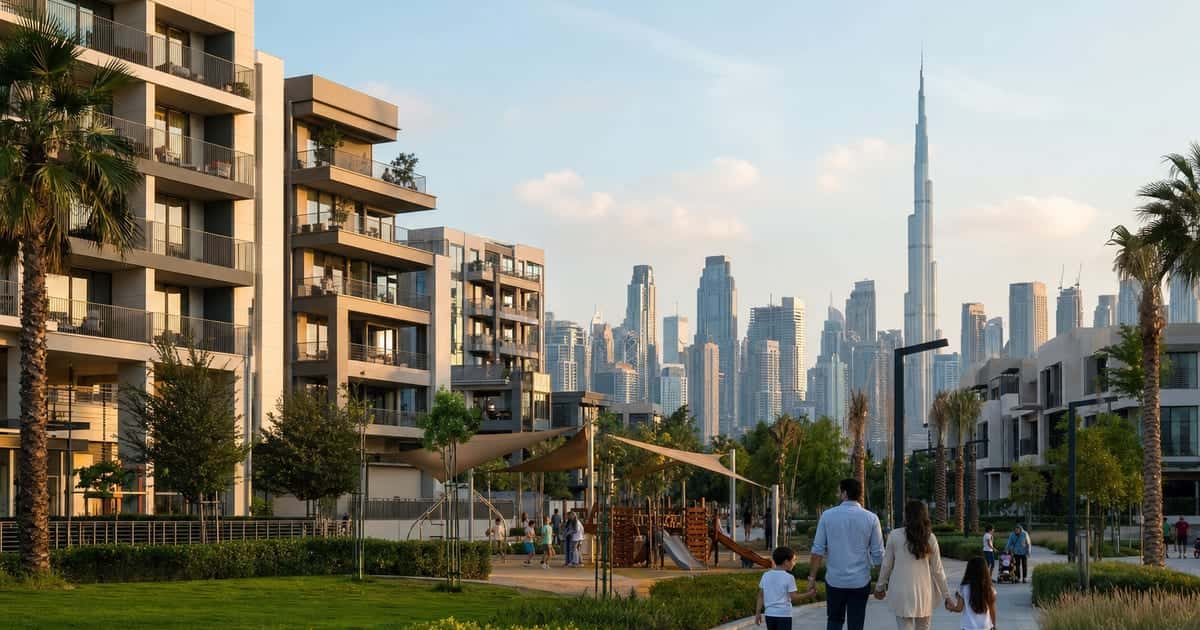

Market Analysis & Updates
Dubai’s First-Time Home Buyer Programme Is Converting Renters to Owners: What It Means for Prices, Deals, and Where to Buy in 2026
Florian
•January 24, 2026
Dubai’s First-Time Home Buyer Programme is quickly becoming one of the most practical “buy now” catalysts in the market—because it targets the biggest pool of real demand: long-term renters who want to own. Recent reporting indicates the initiative has already helped 2,000 first-time buyers purchase homes worth AED 3.25 billion, signaling real conversion from rent-to-own (not just investor churn).
If you’re planning to buy in 2026—or you’re an investor trying to understand where demand is concentrating—this programme matters. Below is what’s actually on offer, who qualifies, and how to use it strategically (without overpaying).
What the First-Time Home Buyer Programme is (and why it’s a 2026 demand driver)
The programme was launched by Dubai Land Department (DLD) and Dubai Department of Economy and Tourism (DET) to make first-time ownership easier through a bundle of advantages: priority access to inventory, preferential pricing/discounts, flexible payment plans, and improved mortgage pathways via partner banks.
In plain terms: it’s designed to shift residents from renting to owning, especially in the sub-AED 5M segment—exactly where end-user demand is deepest.
Eligibility checklist: who can apply (and what “first-time” really means)
Eligibility is straightforward and intentionally broad. You generally qualify if you:
- Are 18+ and hold a valid Emirates ID
- Are a UAE resident (any nationality)
- Are buying a property priced under AED 5 million
- Do not currently own a freehold residential property in Dubai
Important nuance: owning property elsewhere in the UAE may not automatically disqualify you, and some guidance indicates ownership in non-freehold areas may still allow eligibility—always confirm your status through the official registration flow.
What benefits you can realistically expect (and how to value them)
The benefits vary by developer and bank, but the most meaningful advantages typically fall into three buckets:
- Early/priority access to selected units (reduces “launch day” competition and broker-driven scarcity)
- Preferential pricing or limited-time discounts on eligible homes (some reporting cites discounts up to ~10%, depending on project and partner)
- Financing support via partner banks, including faster approvals or reduced fees, plus options to pay DLD registration fees through banks/credit cards on installment terms (where offered)
How to value this: priority access can be worth more than a small discount if it helps you secure a better layout, view, or stack (which impacts resale and rentability). Discounts matter most when they’re paired with a sensible payment plan and a unit you’d buy anyway.
Market impact: where demand could heat up (and what that means for prices and rents)
Because the programme is capped at AED 5M, it naturally concentrates activity in mid-market and “premium-but-not-ultra-luxury” segments. That can create two effects in 2026:
- More competition for well-priced, end-user-friendly homes (especially 1–3BR apartments and entry villas/townhouses)
- Stronger price resilience in communities where residents actually want to live long-term (schools, commute, amenities), not just speculate
For renters: if more tenants become owners, certain submarkets could see slightly less rental pressure over time—but in the near term, demand is still strong and supply delivery timing matters more than sentiment.
How to apply (Dubai REST) and how to use the programme without making a costly mistake
Most guidance points buyers to register via the DLD website or the Dubai REST app. Once verified, eligible applicants receive a QR code used to access programme benefits through participating developers and banks.
Before you commit, use this practical approach:
- Set a total budget (not just the unit price): include down payment, DLD fees, agent/broker fees, mortgage fees, service charges, and furnishing (if relevant).
- Compare “discount vs. layout quality”: a cheaper unit with poor orientation, noise, or weak parking can underperform long-term.
- Stress-test the payment plan: make sure post-handover payments (or mortgage EMIs) stay comfortable if rates move.
- Check exit strategy: even if you’re an end-user, understand resale liquidity and realistic rental comps in the building/community.
Where to focus your search in 2026 (a simple buyer segmentation)
Instead of chasing “hot” projects, match your search to your use-case:
- First home + commute priority: target communities with proven rental demand and strong connectivity (better liquidity if you sell later).
- Family upgrade: prioritize floorplan efficiency, parking, school access, and community maturity over headline discounts.
- Investor using the programme (where eligible): focus on units with the best rentability (layout, view, building quality) rather than the biggest advertised incentive.
Because partner developers include many major names, the opportunity is less about “finding any unit” and more about selecting the right unit inside the right micro-market.
Conclusion: Dubai’s First-Time Home Buyer Programme is not just a headline—it’s a real demand lever shaping the under-AED 5M market in 2026. If you qualify, the combination of priority access, potential discounts, and financing pathways can materially improve your buying outcome—provided you choose the right unit and budget correctly. If you want help shortlisting communities, comparing projects, or running a realistic buy-vs-rent and mortgage budget, BrokeryHero can guide you from eligibility to closing with a strategy-first approach.
Stay in the loop
Get the latest articles delivered every week.
By subscribing, you agree to receive blog updates. Unsubscribe anytime.
More from this category
Oct 5, 2026

Oct 2, 2026

Sep 30, 2026

Sep 28, 2026
Sep 25, 2026

Sep 23, 2026

Sep 21, 2026

Sep 18, 2026
Sep 16, 2026

Sep 14, 2026