Market Analysis & Updates
Dubai Fourth Corridor: What the New 80km Road Means for Property Buyers
Florian
•September 28, 2026
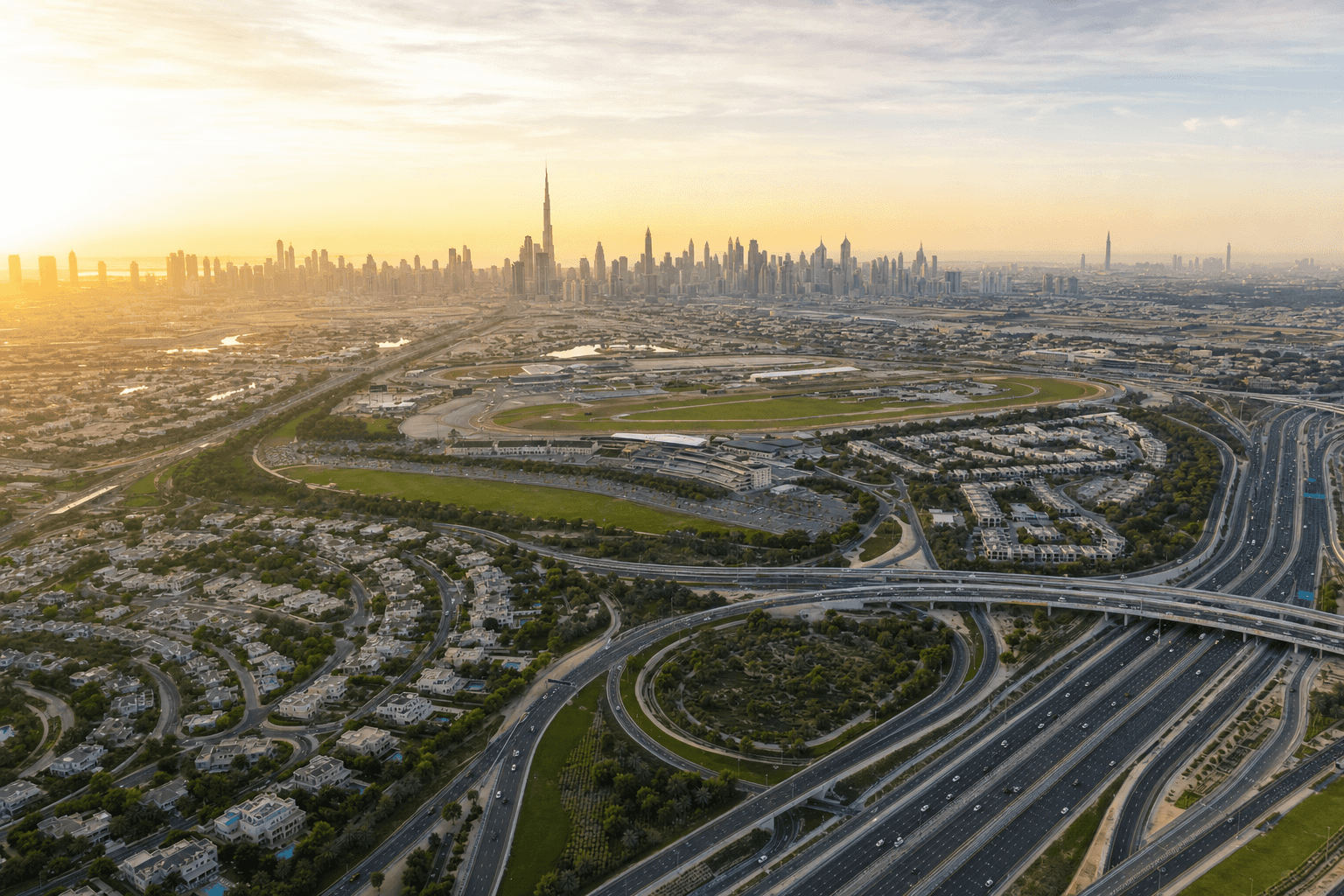
Dubai’s next big infrastructure signal is not another tower launch or waterfront masterplan. On 16 September 2026, Sheikh Hamdan bin Mohammed approved the New Fourth Corridor, an approximately 80km road project designed to strengthen connectivity between Abu Dhabi, Dubai and Sharjah. For property buyers, renters and investors, the key question is simple: which communities become more practical when the city adds a new strategic road spine?
This is a market data explainer and buyer guide, not a promise that prices will rise. Roads can improve accessibility, but property performance still depends on entry price, handover timing, service charges, schools, retail, community maturity and the specific building or villa cluster. Still, in Dubai real estate, infrastructure often changes the way people compare locations. The Fourth Corridor deserves attention because it links directly to long-term growth themes: Dubai-Al Ain Road, Al Maktoum International Airport, Etihad Rail, logistics movement and newer residential areas on the city’s edge.
What is Dubai’s New Fourth Corridor?
The New Fourth Corridor is planned as the fourth strategic road corridor connecting the UAE’s emirates, after Sheikh Zayed Road/Al Ittihad Road, Sheikh Mohammed bin Zayed Road and Emirates Road. The official announcement says it will extend from Al Faya Road in Abu Dhabi to Al Shanouf Road in Sharjah, with implementation in two phases.
Phase 1 will run approximately 30km from Al Shanouf Road in Sharjah to Dubai-Al Ain Road at an estimated cost of around AED 3.5 billion. It is planned as a 12-lane corridor across both directions, with capacity of up to 24,000 vehicles per hour in both directions. RTA expects this phase to reduce journey time by 60%, from 35 minutes to 14 minutes, and serve around 600,000 people.
Phase 2 will extend approximately 50km from Dubai-Al Ain Road to Al Faya Road in Abu Dhabi. It is also planned with 12 lanes across both directions, and official details state it could reduce journey time by 52%, from 50 minutes to 24 minutes, serving around 3.1 million people. Across the full project, the scope includes 72 bridges, 17 tunnels and 45 stormwater drainage culverts.
For real estate decisions, the most important line in the announcement is not only the road length. It is the project’s connection to major assets: Al Maktoum International Airport, the Etihad Rail route, logistics traffic, and several residential and development areas. That makes this more than a commuter road. It is a long-term urban expansion corridor.
Why this matters for Dubai property decisions
Dubai buyers often pay a premium for convenience. Shorter travel times can make an outer community feel less outer. That can widen the buyer pool for villas, townhouses and apartments in growth locations that previously felt too far for daily life.
The Fourth Corridor is especially relevant because the Dubai residential market is already selective. Dubai Real Estate Data’s September 2026 report, using DLD open data through 21 September 2026, recorded 181,672 residential sale transactions over the previous 12 months, worth AED 489.4 billion. The same report showed the median built residential price at AED 1,733 per sq ft, up 6.1% year on year, while off-plan accounted for 68.4% of registered sales.
That mix matters. When off-plan has a large share of activity, infrastructure stories can quickly become sales narratives. Buyers should separate what is approved and documented from what is being marketed. A new road may support future accessibility, but it does not automatically fix oversupply, weak layouts, high service charges or unrealistic payment plans.
Communities and corridors to watch
The official route details do not give a building-by-building impact map, so buyers should avoid overclaiming. However, several zones are logical watch areas because they connect to the themes named in the announcement: Dubai-Al Ain Road, Al Maktoum International Airport, Etihad Rail, logistics movement and new residential development.
- Dubai-Al Ain Road communities: Phase 1 connects to Dubai-Al Ain Road and includes widening Dubai-Al Ain Road from three to four lanes in each direction between Emirates Road and Lehbab Road. Communities with practical access to this corridor should be watched for improved commute perception.
- The Valley and nearby E66 locations: Emaar describes The Valley as being located along Dubai-Al Ain Road. Buyers considering townhouse communities here should monitor whether future access makes school runs, airport trips and cross-emirate travel easier in practice.
- Dubai South and Al Maktoum International Airport areas: The full corridor is linked in the official announcement to Al Maktoum International Airport. Dubai South has also continued adding residential stock, including South Square, where Dubai South said the first tower sold out within three hours and apartments started from AED 1.1 million with Q4 2028 completion.
- Logistics and employment-linked districts: The corridor is expected to support logistics and commercial transport. Over time, this can affect demand for workforce housing, mid-market apartments and family rentals near employment clusters, but investors should verify actual tenant demand before buying.
- Outer villa and townhouse communities: Areas that trade at a discount because of perceived distance may receive more attention if drive times improve. The key is to compare today’s price against comparable mature communities, not against future hopes.
Buyer checklist before paying an infrastructure premium
Infrastructure can be a real value driver, but only if you buy well. Before paying extra because a broker or developer mentions the Fourth Corridor, ask practical questions that connect the road story to the specific property.
- Check the actual access point: A community may be near a corridor on the map but still require a long internal drive, U-turn or congested feeder road.
- Ask about handover timing: If you are buying off-plan, compare the property completion date with publicly announced infrastructure phases. Avoid assuming both will arrive together.
- Compare ready and off-plan pricing: If off-plan pricing is materially higher than ready property in the same broader area, make sure the payment plan, developer quality and future rent assumptions justify the gap.
- Stress-test rent assumptions: A road may improve tenant appeal, but rents still depend on supply, schools, retail, maintenance quality and competition from new handovers.
- Review exit liquidity: In newer districts, resale demand can be thinner than in mature areas. Investors should ask how many comparable units are for sale and what actually transacted, not only what is listed.
- Look beyond the headline commute: Test real routes to work, school, airport terminals, supermarkets, clinics and weekend destinations. A great highway is only part of daily convenience.
How the Fourth Corridor fits Dubai 2040
The Fourth Corridor also fits the wider Dubai 2040 Urban Master Plan direction. Dubai Municipality describes Dubai 2040 as the long-term spatial plan guiding urban development, with goals including better use of infrastructure, vibrant communities with housing and core facilities, improved accessibility, and a people-centric approach.
That context is important for end-users. Dubai is not only expanding outward; it is trying to make newer areas more liveable by improving access, services and infrastructure. For families, that means the best opportunities may not be the cheapest units furthest from the city. They may be communities where roads, schools, parks, retail and healthcare come together within a realistic timeframe.
For investors, the stronger play is not simply “buy near the new road.” It is to identify where infrastructure reduces a genuine friction point. If a community already has strong amenities but suffers from commute objections, improved access can broaden demand. If a project has weak design, poor maintenance prospects or too much competing supply, a road alone is unlikely to save the investment case.
Practical strategy for buyers and investors in 2026
If you are buying to live in Dubai, use the Fourth Corridor as one part of your location shortlist. It may make Dubai-Al Ain Road communities, Dubai South and southern growth areas more practical, especially for households connected to airports, logistics, Abu Dhabi, Sharjah or schools outside the central districts. But do not buy a home you would dislike today just because a future road sounds promising.
If you are investing, focus on fundamentals. Look for sensible entry prices, reputable developers, manageable service charges, efficient layouts, parking, community amenities and a tenant pool that exists beyond launch hype. In a market where DLD-based data shows high off-plan participation, disciplined due diligence is more valuable than chasing every infrastructure announcement.
Also remember that infrastructure impact is often uneven. Villas may benefit differently from apartments. Ready homes may react differently from off-plan launches. Communities with schools and retail may capture demand faster than projects that still require years of supporting amenities. The best question is not “will the Fourth Corridor raise prices?” It is “does this specific property become more useful to more people if the corridor performs as planned?”
Conclusion
Dubai’s New Fourth Corridor is a timely signal for anyone tracking Dubai property investment, relocation and community selection in 2026. It reinforces the long-term growth story around Dubai-Al Ain Road, Al Maktoum International Airport, Etihad Rail and emerging residential districts, while also reminding buyers to stay disciplined.
At BrokeryHero, we would treat this as a serious location catalyst, not a blank cheque. Use it to refine your shortlist, challenge pricing, and compare communities with real data. The winners are likely to be buyers who understand both sides of the story: the infrastructure upside and the property-level caveats.
Sources
- Hamdan bin Mohammed approves New Fourth Corridor project to strengthen Dubai’s road network and inter-emirate connectivity
- Dubai residential market report — September 2026
- Dubai 2040 Urban Master Plan
- Dubai South launches South Square, sells out first tower within three hours
- Dubai's Fourth Corridor to benefit residents living in newer, but more remote areas
Stay in the loop
Get the latest articles delivered every week.
By subscribing, you agree to receive blog updates. Unsubscribe anytime.
More from this category
Sep 25, 2026

Sep 23, 2026
Sep 21, 2026

Sep 18, 2026
Sep 16, 2026
Sep 14, 2026
Sep 11, 2026

Sep 9, 2026
Sep 7, 2026
Sep 4, 2026