
Market Analysis & Updates
Al Meydan Street Upgrade: What Buyers Should Know About Dubai Hills, MBR City and Nad Al Sheba
Florian
•September 4, 2026
Search intent: investor insight and buyer guide.
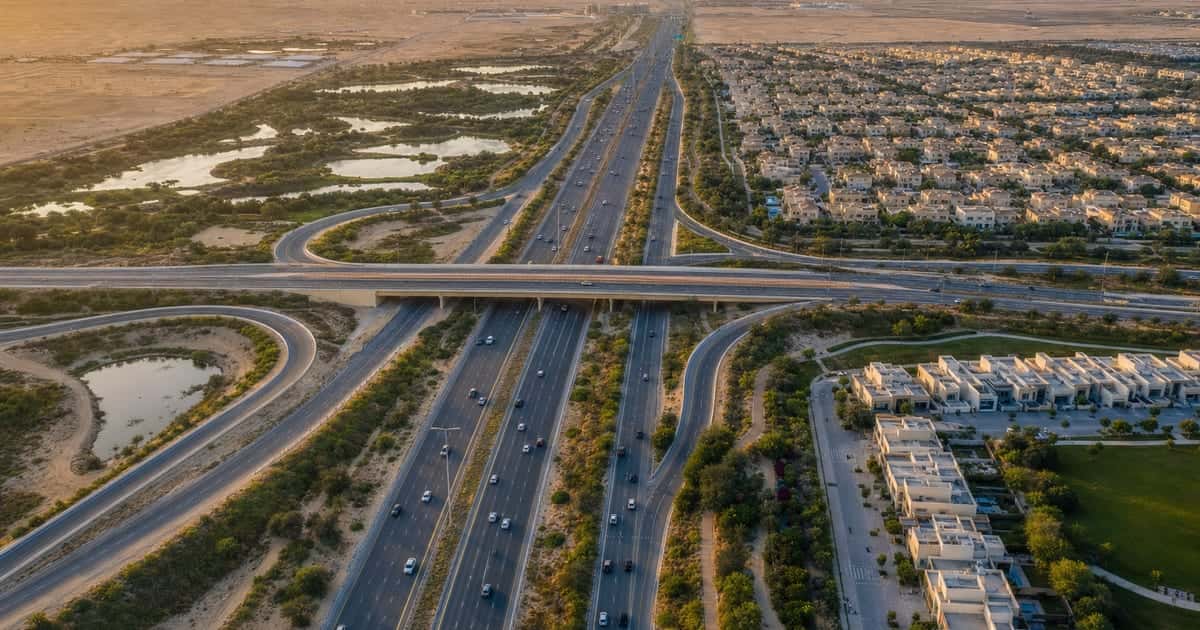
Dubai infrastructure news matters because access often changes how residents choose between similar communities. On 30 August 2026, Dubai’s Roads and Transport Authority awarded two contracts for the Al Meydan Street Development Project at a total cost of AED 1.161 billion. For property buyers, this is not just a road story. It directly touches some of Dubai’s most watched residential zones, including Dubai Hills, Nad Al Sheba, Mohammed Bin Rashid Gardens, Dubai District One, Al Barari and communities along Al Meydan Street.
The project is scheduled for completion by the end of 2028. RTA says it will add 3,700 metres of bridges, 17 kilometres of roads and cycling links, while improving movement across a corridor that runs parallel to Sheikh Mohammed bin Zayed Road and Al Khail Road. The headline travel-time claim is sharp: a journey from Al Manama Street and Dubai–Al Ain Road to Umm Suqeim Street is expected to fall from 30 minutes to 10 minutes, a 66 percent reduction.
That sounds exciting. But smart Dubai property buyers should separate confirmed infrastructure from sales hype. A new corridor can improve daily life and widen tenant demand, but it does not automatically make every off-plan apartment or villa a bargain. Here is how to read the Al Meydan Street upgrade before buying, renting or investing nearby.
What Is Actually Being Built on Al Meydan Street?
The Al Meydan Street Development Project extends from the intersection with First Al Khail Street to Umm Suqeim Street, passing through Al Khail Road, Latifa bint Hamdan Street and Al Marabea’ Street. It also includes development of Al Marabea’ Street up to Sheikh Mohammed bin Zayed Road.
The first contract covers works from Latifa bint Hamdan Street to Umm Suqeim Street, plus Al Marabea’ Street from Dubai Hills to Sheikh Mohammed bin Zayed Road, over approximately 14 kilometres. A major element is the upgrade of the Al Marabea’ Street and Al Meydan Street intersection into a grade-separated interchange with four lanes in each direction. RTA states this interchange will have bridges extending 1,600 metres and a combined capacity of 14,400 vehicles per hour in both directions.
The project also includes a direct connection between Al Marabea’ Street and Sheikh Mohammed bin Zayed Road, with three lanes in each direction and a combined capacity of 7,800 vehicles per hour. For Nad Al Sheba, RTA has announced a 700-metre elevated link on Dubai–Al Ain Road towards Nad Al Hamar Street to improve access to the main road network.
The second contract covers Al Meydan Street from First Al Khail Street, through Al Khail Road, to Muscat Street. It includes around 2 kilometres of new surface roads linking Al Meydan Street with Latifa bint Hamdan Street, plus the conversion of the Al Meydan Street and Muscat Street junction into a multi-level interchange.
Why This Corridor Matters for Dubai Property Decisions
Al Meydan Street is important because it supports movement between central Dubai, established family communities and high-growth villa and townhouse districts. RTA describes it as a strategic corridor running parallel to Sheikh Mohammed bin Zayed Road and Al Khail Road. In simple terms, that means it can act as an alternative route when the main arteries are under pressure.
For buyers, the practical question is not whether a road exists on a map. It is whether the commute, school run and weekend access improve enough to change how people value the community. The areas named by RTA already appeal to different buyer profiles:
- Dubai Hills Estate: established master community demand, family amenities, villas, townhouses and apartments.
- Nad Al Sheba: villa and townhouse appeal, larger family layouts and improving connectivity.
- Dubai District One and MBR City: premium villas, waterfront-style living in selected sub-communities and proximity to Downtown Dubai.
- Al Barari: luxury low-density living, greenery and a lifestyle-led buyer base.
- Mohammed Bin Rashid Gardens and nearby development zones: future-facing supply where road access may be a bigger part of the investment thesis.
When a corridor improves access across these areas, it can support end-user confidence. Families may accept a location slightly farther from Downtown Dubai if the route to schools, offices and leisure areas becomes more predictable. Investors may also see a wider tenant pool if commuting friction is reduced.
Potential Winners: Dubai Hills, Nad Al Sheba, MBR City and Al Barari
The most obvious beneficiaries are communities that currently depend heavily on Al Khail Road, Sheikh Mohammed bin Zayed Road, Dubai–Al Ain Road or internal access points that can feel congested during peak periods. Dubai Hills already has strong brand recognition, but improved Al Marabea’ and Al Meydan connectivity could help residents reach Sheikh Mohammed bin Zayed Road and surrounding corridors more efficiently once works are complete.
Nad Al Sheba is worth watching closely because RTA specifically mentions an elevated link serving the area. For villa and townhouse buyers, road access can make a major difference to daily liveability. A property that looks attractive on price per square foot can become less appealing if every school run or office commute feels unpredictable. Better access can help narrow that perception gap, especially for families comparing Nad Al Sheba with Dubai Hills, Arabian Ranches, Tilal Al Ghaf or The Valley.
District One and wider MBR City may also benefit from a more integrated network. These areas already trade on central positioning and lifestyle quality, but premium buyers still scrutinise convenience. If the Al Meydan project and the Latifa bint Hamdan corridor together improve east-west and north-south movement, the perceived centrality of these communities could strengthen.
Al Barari sits in a more niche luxury segment. Its appeal is not based on being the cheapest route into central Dubai; it is about greenery, space and privacy. Still, better road distribution across surrounding corridors can support its position with buyers who want quiet luxury without feeling disconnected.
Do Not Overpay for Infrastructure Before It Is Delivered
Infrastructure-led buying can work in Dubai, but only when you price risk correctly. The Al Meydan Street project is scheduled for completion by the end of 2028, which means buyers should consider construction disruption, phasing and the difference between announced benefits and lived experience after opening.
Before paying a premium because a listing says “near new RTA corridor”, ask practical questions:
- Which exact access point matters? Being in a broad community named in the announcement is not the same as being close to a useful entry or exit.
- Is the unit ready, under construction or off-plan? Your holding period should match the project timeline.
- What is the current commute like today? Do a test drive at school drop-off and evening peak, not just on a weekend.
- Are comparable transactions supporting the price? Use Dubai Land Department transaction data, not only advertised asking prices.
- Could construction temporarily reduce convenience? Road works can create short-term diversions before long-term gains arrive.
The key caveat is simple: infrastructure can improve desirability, but it should not replace due diligence on developer quality, handover timing, service charges, floor plan efficiency, view, noise exposure and realistic rent.
How Investors Should Underwrite the Al Meydan Upgrade
For investors, the Al Meydan Street upgrade should be treated as a demand-supporting factor, not a guaranteed capital appreciation trigger. The strongest case is where improved access aligns with genuine tenant demand: family-sized units near schools, villas with practical layouts, and apartments in communities with amenities that residents use daily.
A sensible underwriting approach is to compare two scenarios. First, model the asset using today’s rent and resale evidence without assuming a road premium. Second, model a moderate improvement in liquidity or tenant depth after the corridor is delivered. If the deal only works under an aggressive future-access story, it is probably too speculative.
Also watch supply. Many parts of Dubai are seeing new handovers and off-plan launches competing for the same buyer and tenant pools. Better roads can help absorb growth, but they do not eliminate oversupply risk in buildings with weak layouts, high service charges or poorly differentiated amenities.
For end-users, the question is different. If the property fits your family, school, commute and lifestyle needs today, future road improvements are a bonus. If the property only makes sense after 2028, negotiate accordingly.
Bottom Line: Buy the Property, Not Just the Road Story
The AED 1.161 billion Al Meydan Street Development Project is a timely signal that Dubai is continuing to build infrastructure ahead of population and community growth. For Dubai Hills, Nad Al Sheba, MBR City, District One and Al Barari, the corridor could improve access, commute confidence and long-term residential appeal.
But buyers should stay disciplined. Do not buy a poor unit in a weak project just because a major road upgrade is nearby. Focus on exact location, current transaction evidence, handover timing, access points and the type of tenant or end-user the property will realistically attract.
BrokeryHero’s view is practical: the Al Meydan upgrade is worth factoring into your Dubai property shortlist, especially for family communities and long-hold investors, but it should be one part of a broader decision—not the whole investment case.
Sources
- RTA Awards Two Contracts for Al Meydan Street Development Project Worth AED 1.1 Billion
- Dubai Media Office: RTA Awards Two Contracts for Al Meydan Street Development Project
- Khaleej Times: New Dubai Road Project to Cut Journey Time to 10 Minutes on Al Meydan Street
- RTA Awards AED 2 Billion Contract for Latifa bint Hamdan Corridor Development Project
- Dubai Land Department Real Estate Data
Stay in the loop
Get the latest articles delivered every week.
By subscribing, you agree to receive blog updates. Unsubscribe anytime.
More from this category
Oct 9, 2026
Oct 7, 2026
Oct 5, 2026
Oct 2, 2026

Sep 30, 2026

Sep 28, 2026
Sep 25, 2026

Sep 23, 2026
Sep 21, 2026

Sep 18, 2026