Dubai Properties
Dubai Soft Mobility Plan 2030: What Walkable Communities Mean for Property Buyers
Florian
•July 31, 2026
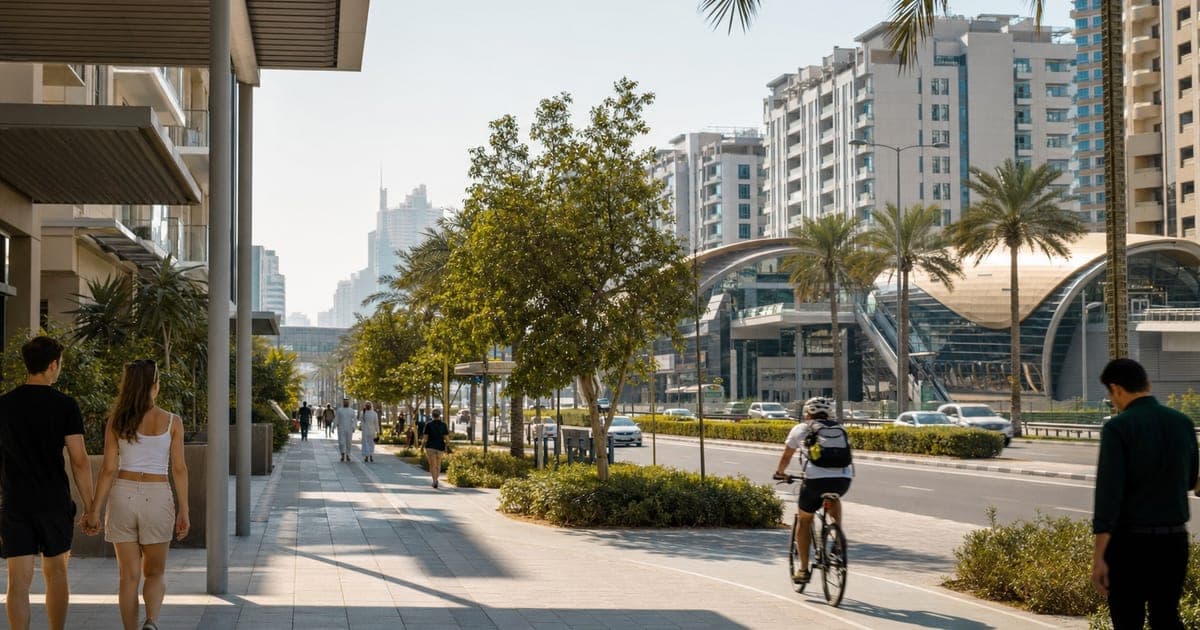
Dubai’s next property differentiator may not be another tower, beach club or branded lobby. It may be the simple ability to walk, cycle or use an e-scooter safely from home to the Metro, bus station, shops, school run or office.
On 19 July 2026, Dubai’s Roads and Transport Authority approved a five-year soft mobility plan running to 2030. The plan covers infrastructure development across 25 residential areas and upgrades around 63 public transport stations. RTA also confirmed that soft mobility elements are currently being implemented in Dubai Marina, Al Murar, Naif, Al Rigga and Al Muraqqabat, while nine areas have already had similar elements developed.
For Dubai real estate buyers, renters and investors, this is not just transport news. It is a liveability signal. In a market where Q2 2026 data shows buyers becoming more selective, tenants gaining more choice and landlords facing more competition, walkable access can become a practical advantage rather than a lifestyle buzzword.
Why Dubai’s soft mobility plan matters for property decisions
The Dubai soft mobility plan is designed to improve first- and last-mile movement. In plain terms, it aims to make it easier to complete the short journey between a home, office or destination and public transport without depending on a private car.
According to the official announcement, upgrades may include pedestrian and cycling tracks, safe crossings, shaded areas and pathways, rest areas, landscaping, bicycle parking, pick-up and drop-off points, and facilities for People of Determination. RTA also said pedestrian journeys rose from 326 million in 2024 to 342 million in 2025, while cycling trips increased from 46.6 million to 57.3 million and e-scooter trips from 32.3 million to 39.6 million over the same period.
For property decisions, this matters because access quality is becoming more granular. It is no longer enough for a listing to say near Metro or close to public transport. A building may be 700 metres from a station on a map, but that walk can feel very different depending on shade, crossings, pavements, traffic speed, heat exposure and whether the final route is safe at night.
Buyers should treat the new plan as a reason to inspect the street experience, not as a blanket guarantee of future price growth. The strongest long-term benefit is likely to appear where transport upgrades combine with genuine resident demand, good building quality and daily-use amenities.
Which areas are named so far?
The most important caveat is that not all 25 future residential areas have been publicly named in the official announcement. The currently named implementation areas are Dubai Marina, Al Murar, Naif, Al Rigga and Al Muraqqabat. RTA also said previous soft mobility works were developed in Al Mankhool, Al Qusais, Al Karama, Al Barsha 1, Al Barsha 2, Al Khawaneej 2, Hor Al Anz, Abu Hail and Al Souk Al Kabeer.
That distinction is important. Investors should avoid paying speculative premiums in communities promoted only by rumour. Until a location is clearly named, mapped or scheduled by RTA, treat any marketing claim about future walkability as a hypothesis to verify.
Still, the named areas give useful clues about Dubai’s direction. Dubai Marina is already a mature, premium, high-density apartment market with tram, Metro access via DMCC and Sobha Realty, waterfront lifestyle and strong rental appeal. Better pedestrian and micro-mobility infrastructure could reinforce its position for car-light residents, tourists and professionals.
By contrast, Al Rigga, Al Muraqqabat, Naif and Al Murar sit in older, more urban parts of Dubai. These areas have high footfall, established retail, Metro proximity, older apartment stock and a very different rental profile from new master communities. Soft mobility upgrades there may support tenant retention, small-business access and practical affordability, especially for residents who already rely on public transport.
How walkability changes the buyer and renter checklist
In Dubai, two apartments with similar size and finishing can perform very differently if one has a better real-world commute. This is becoming more relevant as new supply gives tenants more choice and as buyers become more selective about what they are willing to pay for.
Before buying or renting in a community affected by current or future soft mobility upgrades, check the following:
- Actual walking time: Walk from the building entrance to the nearest Metro, tram or bus stop in the evening and during a hot part of the day. Do not rely only on map distance.
- Crossing quality: Look for safe crossings, traffic signals, raised crossings, wide pavements and whether the route forces pedestrians to take long detours.
- Shade and comfort: In Dubai, shade can be the difference between a theoretical walkable location and a practical one.
- Building exit experience: Some towers have attractive lobbies but poor pedestrian access once you leave the plot.
- Shared mobility access: Check whether bicycle parking, e-scooter parking or Careem Bike-style facilities are actually present nearby.
- Noise and congestion trade-off: Better access can also mean more foot traffic, pick-up zones and activity around stations.
For renters, this checklist can support negotiation. If a landlord advertises a property as walkable, test the route and use real observations when comparing options. For buyers, it can help separate a genuinely connected asset from a building that is merely close to a major road.
Investor angle: walkable does not automatically mean underpriced
Dubai investors often look for the next infrastructure story before it is fully priced in. That logic can work, but soft mobility is different from a new Metro line or a major highway opening. It is more subtle. It improves convenience, liveability and station access, but it does not automatically transform every nearby building into a high-growth asset.
The better investment question is: Will this upgrade increase the pool of tenants who would realistically choose this building?
In Dubai Marina, the answer may be strongest for buildings that already appeal to professionals and lifestyle renters but suffer from awkward pedestrian connections, difficult crossings or poor access to tram and Metro routes. In Al Rigga and Al Muraqqabat, the upside may be more about occupancy resilience and tenant convenience than luxury appreciation. In Naif and Al Murar, investors should pay extra attention to building age, maintenance, service charges, parking limitations and realistic tenant profiles.
Market context also matters. CBRE’s Q2 2026 review said Dubai’s residential market moderated during the quarter as demand softened, transaction activity declined and new supply helped ease pricing pressure. Betterhomes reported that Dubai recorded 34,850 residential transactions in Q2 2026, down year on year, while tenant enquiries rose and landlords faced more competition. Bayut’s H1 2026 rental report also described a more moderate rental environment across many communities, with tenants seeking value, connectivity and amenities.
That means infrastructure quality is useful, but pricing discipline is still essential. A walkable building at the wrong entry price can still produce a weak yield. A less fashionable but genuinely connected building with fair service charges and consistent tenant demand may be the smarter investment.
Practical caveats before you buy near a mobility upgrade
Do not treat every transport announcement as an immediate property catalyst. The Dubai soft mobility plan runs through 2030, and the timing, phasing and exact scope can vary by area and station. Some improvements may be completed quickly; others may take longer or be delivered in stages.
Also remember that soft mobility upgrades do not fix every property issue. A poor-quality building, high maintenance burden, weak natural light, limited parking, bad layout or unrealistic asking price will not be solved by a nearby cycle track.
For off-plan buyers, be especially cautious. If a sales agent says a future walking or cycling network will support capital appreciation, ask for the official source, the specific route, the current project status and whether the claim relates to the building, the wider district or only a general Dubai-wide policy.
For landlords, the practical move is to position the property around convenience with evidence. If your apartment is near a station and the route is improving, show the actual access points, walking route, nearby services and commute options in your listing. In a more competitive rental market, useful details can help your unit stand out without relying only on price cuts.
What BrokeryHero would watch next
The next signal to watch is whether RTA releases more detailed maps, community names, station-level upgrades or delivery timelines for the remaining areas. Once those details become clearer, buyers can compare genuine walkability improvements against current asking prices and rental demand.
For now, the smartest approach is balanced. Give extra attention to Dubai properties with real, inspectable access to Metro, tram, buses, shops and daily amenities. Be careful with vague future-upgrade claims. And compare the convenience premium against building quality, service charges, rentability and exit demand.
Dubai’s soft mobility plan is a reminder that the best real estate decisions are not only about skyline views or launch hype. They are about how people actually live, commute and move through the city. BrokeryHero helps buyers, renters and investors read those details before they commit, so a property decision fits both the market and everyday life in Dubai.
Sources
- RTA Approves Five-Year Soft Mobility Plan Covering 25 Residential Areas and 63 Public Transport Stations by 2030
- From Dubai Marina to Rigga: RTA to connect 25 communities with walkways, cycling path
- UAE Real Estate Market Review Q2 2026
- Q2 2026: Sales cooled to AED84.9bn, but prices and rents kept climbing
- Bayut’s H1 2026 Dubai Rental Market Report
Stay in the loop
Get the latest articles delivered every week.
By subscribing, you agree to receive blog updates. Unsubscribe anytime.
More from this category
Sep 9, 2026
Sep 7, 2026
Sep 4, 2026
Sep 2, 2026
Aug 31, 2026
Aug 28, 2026
Aug 17, 2026

Aug 14, 2026
Aug 12, 2026
Aug 10, 2026