
Market Analysis & Updates
Dubai’s July 2026 Handover Wave: What 11,404 New Homes Mean for Buyers and Renters
Florian
•August 31, 2026
Dubai’s property market is shifting from launch-led excitement to a more practical question: what happens when thousands of promised homes become real, finished units?
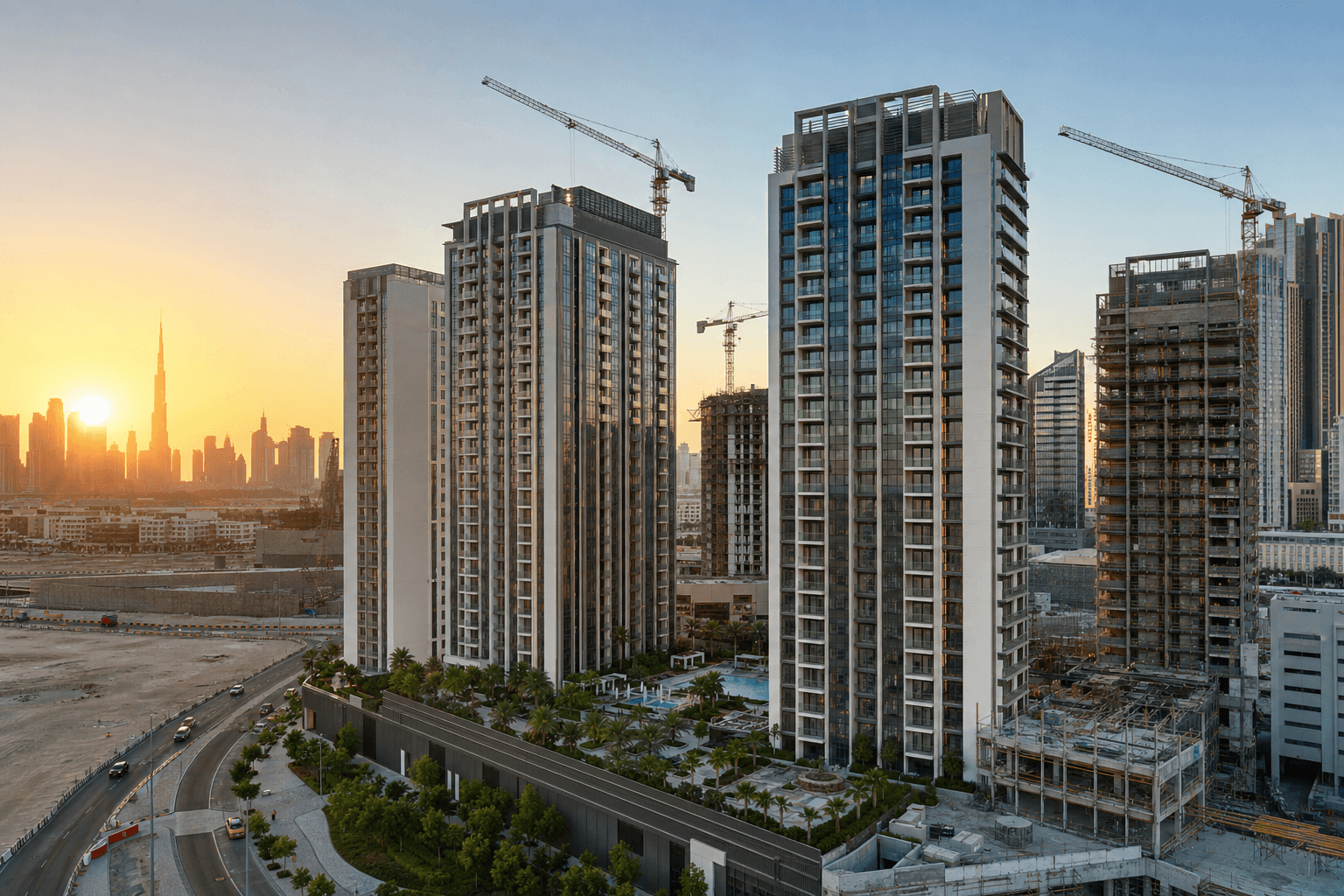
That question became more urgent in August 2026 after July handover data showed a large wave of completed residential stock. According to DLD-linked project registry tracking, 19 residential projects totaling 11,404 units reached finished status in July 2026, with activity led by Hadaeq Sheikh Mohammed Bin Rashid and including new supply in areas such as Al Barsha South Fifth.
For buyers, renters and investors, this is not just a construction headline. More handovers can change negotiation power, rental competition, resale pricing and the risk profile of buying near-handover off-plan property in Dubai.
The search intent behind this topic is clear: market data explainer and buyer-investor playbook. If you are deciding whether to buy a ready apartment, hold an off-plan unit, rent in a newly completed building, or invest in a handover-heavy community, July’s supply signal deserves attention.
Why Dubai’s July 2026 Handovers Matter Now
Dubai has had several years of strong off-plan demand. But off-plan sales and finished supply do not affect the market in the same way. A launch creates future inventory. A handover creates homes that can be lived in, leased, resold, financed, snagged, furnished and compared against other ready units.
That is why July’s 11,404-unit figure matters. It followed a Q2 2026 period in which Cushman & Wakefield Core reported more than 13,200 units delivered in Dubai. The same Q2 market commentary described a more measured phase, with price and rental softening becoming visible in parts of the market as supply expanded.
This does not mean Dubai property prices are suddenly falling everywhere. Dubai is not one market. Prime villas in tightly held communities behave differently from investor-led apartment clusters with multiple buildings completing at once. But it does mean buyers should stop relying only on broad citywide averages and start asking a more specific question: how much competing ready stock is arriving in this exact building, district and unit type?
What More Finished Stock Can Change in Dubai Real Estate
Freshly handed-over supply can affect the market through several channels. First, it gives tenants more options, especially in apartment-heavy locations where multiple buildings complete around the same time. Second, it gives buyers more comparable evidence, because newly completed units start to appear as resale listings and rental listings. Third, it can pressure investors who planned to flip or lease immediately after handover but now face similar units entering the market together.
DXBinteract’s Q2 2026 market report showed a useful split in the rental market: new apartment leases were broadly flat year on year at a median of AED 70,000, while apartment renewals rose in both contract count and median rent. In practical terms, that suggests many existing tenants were still absorbing renewal increases, but tenants willing to move had more room to compare new options.
For landlords, that means pricing a unit based on last year’s peak listing is risky. For tenants, it means renewal negotiations should be backed by current, building-specific evidence rather than generic comments about Dubai rents cooling. For buyers, it means ready homes in handover-heavy areas may offer more negotiation than off-plan brochures imply.
- Tenants should compare renewal quotes against newly handed-over buildings nearby.
- End-user buyers should inspect ready and near-ready alternatives before committing to a payment-plan premium.
- Investors should model lease-up time, furnishing cost and vacancy risk, not just headline gross yield.
- Owners should watch competing listings in the same tower, not only community-level averages.
Buyer Playbook: Ready Homes vs Near-Handover Off-Plan
July’s handover wave makes the ready-versus-off-plan decision more interesting. In a fast-rising market, buyers often accept off-plan risk to secure future appreciation. In a more balanced market, completed homes become more attractive because you can inspect the product, compare real service charges, check the building condition and negotiate from evidence.
If you are buying a ready apartment in Dubai, ask for recent DLD transaction comparables in the same project or a very close substitute. Do not rely only on asking prices. A listing can sit above market for months, while actual registered transfers tell you where deals are clearing.
If you are buying near-handover off-plan, the checklist should be stricter. Use the Dubai Land Department’s project status enquiry tools or verified registry data to check completion progress. Confirm the expected handover timeline, the developer’s track record, the escrow arrangement, the payment schedule after completion and whether any post-handover payment plan is priced into the purchase price.
Near-handover property can still be attractive. It may reduce construction waiting time while preserving some developer-payment flexibility. But it is not automatically safer than ready property. The risk simply changes: less uncertainty about completion, more uncertainty about final defects, service charges, immediate rental competition and valuation at transfer.
Investor Lens: Where Handover Competition Matters Most
Investors should pay particular attention to communities where supply is arriving in batches. The July handover data points to completed stock in areas including Hadaeq Sheikh Mohammed Bin Rashid and Al Barsha South Fifth, while other public handover trackers continue to show delivery activity across apartment-led growth zones in Dubai.
This matters because rental performance is local. A well-priced one-bedroom in a finished, well-managed building near strong transport, schools or employment hubs can still lease quickly. A generic unit in a cluster where hundreds of similar apartments hit the market at once may need sharper pricing, furnishing upgrades or a longer vacancy buffer.
Before buying for investment, stress-test the deal using conservative assumptions. Instead of asking, “What is the highest rent this unit could achieve?” ask, “What rent clears quickly if five similar units are listed in the same building?” Also check whether the area attracts end-users, short-term rental operators, long-term tenants or mainly investors. Each demand pool behaves differently when new supply arrives.
A practical Dubai investor model should include:
- Realistic rent based on current Ejari or comparable listings, not only portal asking prices.
- Vacancy buffer for the first one to three months after handover, especially in large towers.
- Furnishing and snagging budget if the unit needs to stand out.
- Service charge sensitivity, because higher recurring costs can reduce net yield.
- Exit liquidity, including how many similar units may be resold at the same time.
Renter Strategy: Use New Supply Without Getting Distracted
For renters in Dubai, more completed stock can be good news, but it does not guarantee an easy bargain. The best opportunities usually appear where multiple new buildings complete near the same commute routes or lifestyle nodes. Tenants in areas such as JVC, JVT, Al Barsha South, Dubai South, MBR City and other apartment-heavy districts should monitor nearby handovers closely, but they should also inspect quality carefully.
A brand-new building can come with practical frictions: pending facilities, ongoing fit-out noise, lift congestion, chiller setup, parking allocation, snagging visits and move-in delays. A slightly older building with stable management may be better value than a new tower offering a small headline discount.
If your landlord proposes a renewal increase, collect evidence before negotiating. Compare similar unit sizes, building age, parking, chiller terms, view, furnishing and commute. If you are willing to move, new handovers can strengthen your position. If you are not willing to move, your negotiating leverage is lower, because the landlord knows convenience has value.
Practical Caveats Before You Act
Handovers are important, but they should not be overinterpreted. A finished-status project does not mean every unit is instantly occupied or listed. Some owners furnish slowly. Some units remain with end-users. Some investors wait before leasing. Some buildings need time before facilities operate smoothly.
Also, supply is not evenly distributed. Apartment supply may expand while family villas remain limited in established communities. That is why a Dubai Marina apartment, a Dubai Hills villa, a JVC studio and a Dubai South townhouse can all react differently to the same citywide supply headline.
Regulatory checks also matter. Buyers should verify project status, title or Oqood position, service charges, developer notices, handover documents and any payment-plan obligations before signing. Renters should confirm the landlord’s authority, tenancy terms, chiller responsibility, parking, maintenance obligations and Ejari registration. These are practical risk controls, not paperwork formalities.
The key is to treat July’s handover wave as a negotiation signal, not a prediction machine. More finished homes can improve choice and discipline pricing, but the result depends on location, product quality, unit layout, building management and the motivations of individual sellers and landlords.
Conclusion: A More Selective Dubai Property Market Is Emerging
Dubai’s July 2026 handover wave is one of the clearest recent signs that the market is becoming more selective. Buyers have more reason to compare ready stock. Renters have more reason to challenge renewal increases with real alternatives. Investors have more reason to underwrite vacancy, service charges and competing supply instead of relying on headline growth.
For BrokeryHero clients, the practical takeaway is simple: do not buy or rent based on a citywide story. Look at the building, the handover pipeline, recent DLD evidence, rental competition and your own holding period. In a market with more completed homes, the best decisions will come from sharper local due diligence.
Sources
Stay in the loop
Get the latest articles delivered every week.
By subscribing, you agree to receive blog updates. Unsubscribe anytime.
More from this category
Oct 9, 2026
Oct 7, 2026
Oct 5, 2026

Oct 2, 2026

Sep 30, 2026

Sep 28, 2026

Sep 25, 2026

Sep 23, 2026
Sep 21, 2026

Sep 18, 2026