Dubai Properties
Dubai Ultra-Prime Homes Hit a Record in H1 2026: What Buyers Should Check Before Paying a Premium
Florian
•August 10, 2026
Dubai’s luxury property market has just delivered a very specific signal: the top end is still active, even while the wider residential market is becoming more selective.
In July 2026, Knight Frank reported that Dubai recorded 296 residential sales above US$10 million during H1 2026, with a total value of US$5.1 billion. The first quarter saw 165 such transactions, followed by 131 in Q2, including 26 deals above US$25 million. The most expensive H1 2026 sale was a six-bedroom apartment at Aman Residences in Jumeirah Second for US$114.9 million, or AED 422 million.
That is not a generic “Dubai is booming” story. It is more useful than that. It tells buyers and investors that ultra-prime Dubai real estate is increasingly behaving like a separate market, driven by scarcity, global wealth migration, branded residences, waterfront addresses and end-user lifestyle demand. At the same time, Q2 market reports show a broader slowdown in transaction volumes, more supply on the way and more negotiation room outside the strongest prime pockets.
For anyone considering a luxury apartment, villa, branded residence or waterfront home in Dubai in 2026, the question is not simply “is the market up?” The better question is: is this specific property rare enough, well-located enough and well-priced enough to hold value when the market becomes more selective?
Why Dubai’s US$10 Million-Plus Market Matters
The US$10 million-plus segment is small compared with Dubai’s overall transaction base, but it is important because it shows where the highest-conviction capital is moving. These buyers are often less dependent on mortgage rates and more focused on lifestyle, residency, asset protection, privacy, education, global connectivity and long-term capital preservation.
Knight Frank’s H1 2026 data showed US$10 million-plus sales up 16% compared with H1 2025 and up 49% compared with H1 2024. That resilience matters because it came against a more uncertain regional and macro backdrop. In the same period, other market reports pointed to softer demand and lower transaction activity across the wider Dubai residential market.
This split is the key insight. Dubai property is no longer one single market moving in one direction. A trophy villa on Palm Jumeirah, a branded residence in Jumeirah Second, an off-plan waterfront mansion on Palm Jebel Ali and a mid-market apartment in a high-supply corridor all have different demand drivers and exit risks.
Where Ultra-Prime Demand Is Concentrating
According to Knight Frank, Dubai Hills Estate led the US$10 million-plus segment in H1 2026 with 51 sales, followed by Palm Jumeirah with 50 and Palm Jebel Ali with 40. That mix is revealing.
Dubai Hills Estate is not just selling size. It is selling a mature family-lifestyle proposition: villas, greenery, schools, healthcare access, Dubai Hills Mall, golf, and reasonable connectivity to major business districts. For wealthy families relocating to Dubai, this kind of integrated community can be more practical than a purely trophy waterfront address.
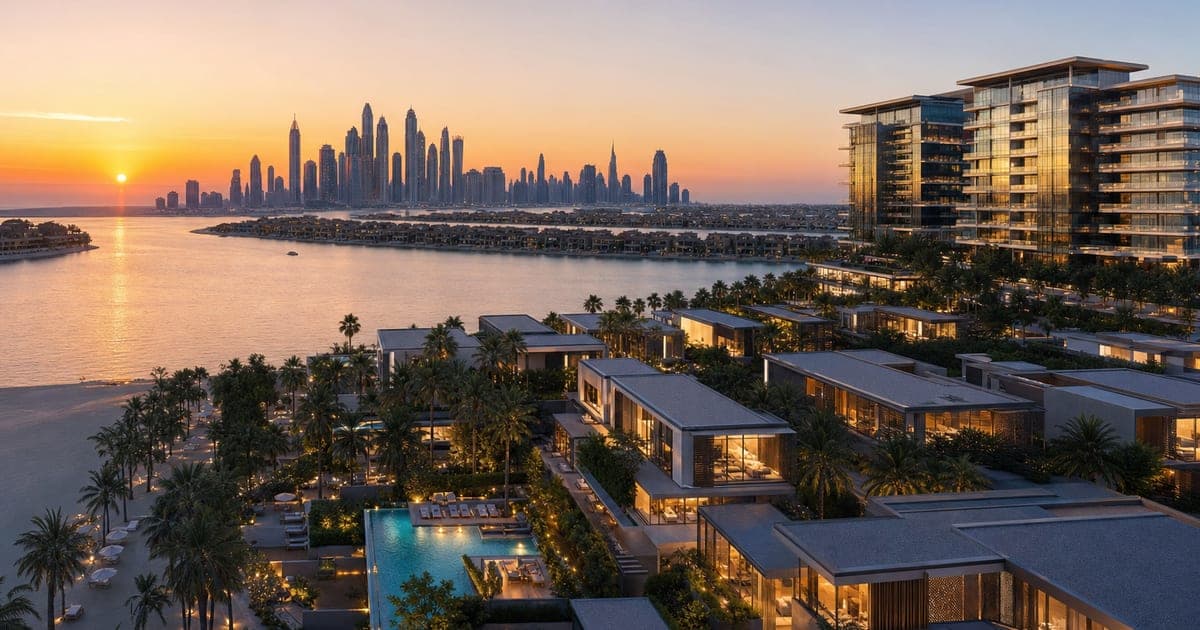
Palm Jumeirah remains Dubai’s global luxury shorthand. It offers established scarcity, sea views, branded hotels, private beach access in many projects, and a resale history that international buyers understand. The caveat is pricing discipline: buyers should compare renovated versus unrenovated stock, plot orientation, beach frontage, service charges and actual recent transactions rather than relying on headline asking prices.
Palm Jebel Ali is different. It is a future-facing bet on scale, waterfront scarcity and long-term masterplan delivery. For buyers, the opportunity is early positioning in a major new coastal district. The risk is timing: handover, infrastructure maturity, community activation and future competing supply all need to be underwritten carefully.
The Brand Premium: Status Asset or Real Value?
Branded residences are now central to Dubai’s luxury property conversation. CBRE’s UAE Branded Residences Report said Dubai leads the global branded residences market, with branded units commanding a significant premium over non-branded stock and off-plan sales dominating the segment. That helps explain why projects tied to hotel, fashion, automotive and lifestyle brands are attracting global attention.
But a brand name is not automatically an investment thesis. A buyer should separate three things:
- Real operating value: Does the brand provide hotel-level service, rental management, concierge, wellness facilities or maintenance standards that improve the owner experience?
- Design and specification value: Are the finishes, layouts, ceiling heights, amenities and views genuinely better than comparable non-branded projects?
- Resale value: Is there evidence that buyers in this location pay a premium on resale, or is the premium mainly a launch-marketing feature?
Hospitality-managed branded residences can be attractive for overseas owners who want service, security and consistency. Badge-only projects need more caution. If the brand does not materially improve operation, design, rental demand or resale liquidity, the buyer may simply be paying extra for the logo.
Why the Wider Market Cooling Still Matters
The ultra-prime record should not be read in isolation. Betterhomes reported that Dubai residential transactions fell 31% year on year in Q2 2026 to 34,850 deals, while total transaction value fell to AED 84.9 billion. The same report noted that off-plan represented 76% of sales activity and that 74,100 new homes are due to complete in Dubai in 2026, with completions expected to peak in 2027.
CBRE’s Q2 2026 review also described Dubai’s residential market as moderating, with softer demand, lower transaction activity and new supply helping ease pricing pressures.
For luxury buyers, this does not mean panic. It means leverage may be returning in some segments. Sellers of genuinely rare waterfront villas, branded penthouses and best-in-class family homes may still hold firm. But owners of average stock in weaker locations may become more flexible, especially if they bought recently and expected a quick flip.
That creates a more professional market. Buyers who do the work can avoid overpaying for hype and focus on assets with stronger long-term fundamentals.
Due Diligence Checklist for Luxury Buyers in Dubai
Before committing to a high-value Dubai property in 2026, buyers should move beyond brochure language and test the asset like an investment.
- Check recent registered transactions: Compare the asking price with actual DLD transaction data for the same building, street, frond, community or product type.
- Stress-test the service charges: Ultra-luxury amenities can become expensive. High service charges can reduce rental yield and affect resale appeal.
- Understand the view and scarcity: Full sea view, golf view, skyline view, corner plot, beach access and low-density positioning can create real value differences.
- Review developer and contractor track record: Especially for off-plan branded residences and future waterfront communities.
- Clarify usage rules: Check short-term rental permissions, hotel management structures, owner-use restrictions and furnishing obligations where relevant.
- Model the exit: Ask who the future buyer will be: end-user family, overseas investor, HNWI, tenant-buyer, or another speculator.
For off-plan purchases, also examine escrow protections, payment milestones, handover assumptions and comparable resale premiums. In a selective market, the best launch is not always the best investment. Sometimes a ready unit with a motivated seller, clear title and proven rental history is the cleaner buy.
Practical Takeaway for Investors and End-Users
Dubai’s H1 2026 ultra-prime record confirms that global capital still views the emirate as a serious luxury property destination. But it also confirms that buyers need to be more precise. The strongest demand is concentrating around scarce, lifestyle-led and internationally recognisable assets: Dubai Hills Estate villas, Palm Jumeirah trophy homes, Palm Jebel Ali waterfront plots and residences, and select branded residences with genuine operational value.
For end-users, the right purchase should improve daily life first and investment performance second. For investors, the deal must make sense after service charges, vacancy, fit-out, furnishing, financing costs, exit fees and realistic resale assumptions.
The BrokeryHero view is simple: do not buy Dubai luxury property because the headline market is breaking records. Buy because the specific asset has defensible scarcity, transparent pricing, strong usability and a clear future buyer. In 2026, that discipline matters more than ever.
Sources
Stay in the loop
Get the latest articles delivered every week.
By subscribing, you agree to receive blog updates. Unsubscribe anytime.
More from this category
Sep 9, 2026
Sep 7, 2026
Sep 4, 2026
Sep 2, 2026
Aug 31, 2026
Aug 28, 2026
Aug 17, 2026

Aug 14, 2026
Aug 12, 2026