Investment Guide
City of Arabia Dubai 2026: Off-Plan Buyer Guide After The Yards Launch
Florian
•August 3, 2026
Search intent: investor insight and off-plan buyer guide.
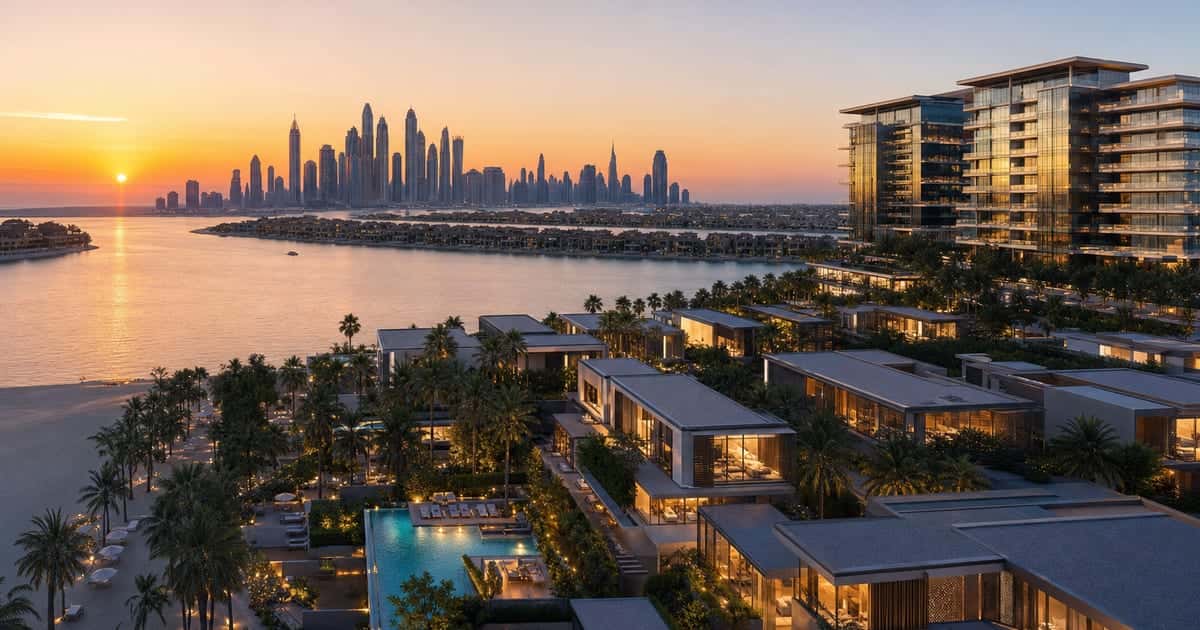
City of Arabia is becoming one of the more interesting Dubai off-plan stories of summer 2026. The reason is not just another apartment tower launch. On 9 June 2026, BEYOND Developments unveiled The Yards, a Dh4 billion master-planned destination in City of Arabia, with Arancia as its first residential cluster. That puts a fresh spotlight on a part of Dubailand that many buyers know by name, but fewer have properly underwritten.
For investors, first-time buyers and residents comparing Dubai South, JVC, Arjan, Dubai Land Residence Complex and City of Arabia, the question is simple: is this an early-stage value opportunity, or just another off-plan pitch in a market with more supply coming?
The answer depends on how you buy. City of Arabia has genuine location logic, improving launch quality and a growing pipeline. But it is still an emerging district, which means buyers need to be stricter on entry price, handover timing, payment plan risk, service charges, resale liquidity and rental assumptions.
Why City of Arabia Is a 2026 Dubai Property Topic
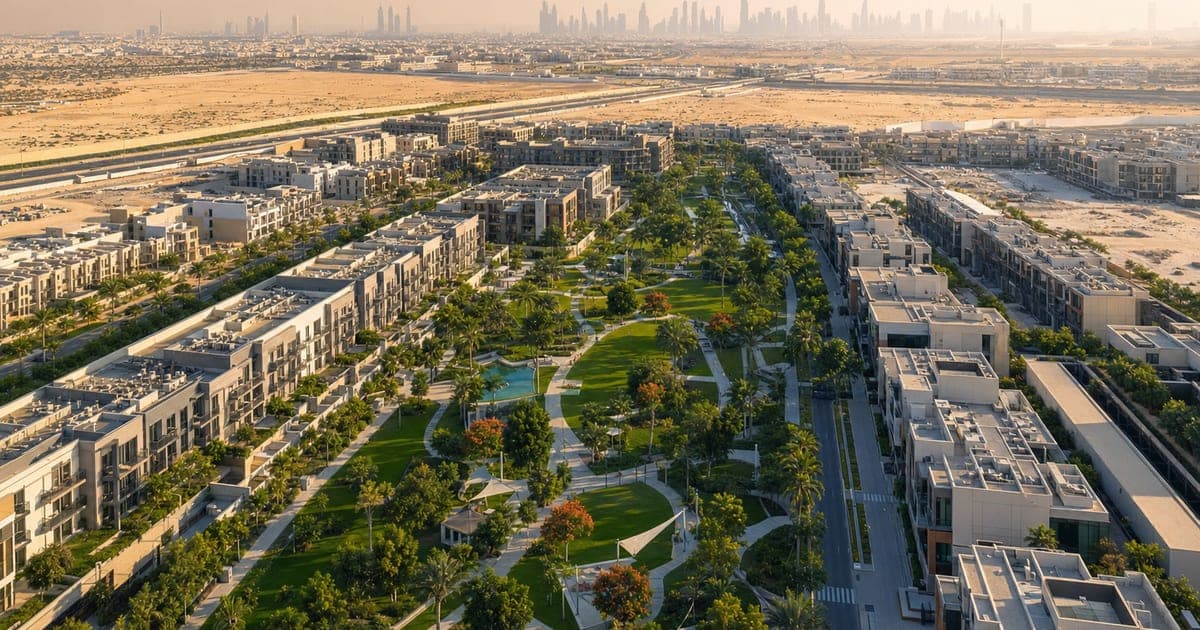
The timely trigger is The Yards. According to Aletihad, the project is planned as a Dh4 billion master-planned destination in Dubai’s City of Arabia with 2.3 million square feet of gross floor area and 1,560 residential units ranging from one- to three-bedroom apartments. The development is designed around a one-kilometre green spine, with 70% of the total area allocated to open landscape.
Arancia Yards, the first cluster, is smaller and more immediate: 272 residences across three low-rise buildings, including one-, two- and three-bedroom units. Bayut’s July 2026 new-launch coverage also lists Arnacia Yard in City of Arabia among the month’s notable Dubai off-plan launches, with a reported Q4 2028 handover date.
That matters because City of Arabia has often been discussed as a future-facing Dubailand location rather than a fully mature residential market. A new master-planned launch from a design-led developer changes the conversation from “what might happen here someday?” to “what should buyers pay today for a handover several years out?”
The location has practical appeal. City of Arabia sits within the wider Dubailand orbit, with access to Sheikh Mohammed Bin Zayed Road and proximity to leisure anchors such as IMG Worlds of Adventure and Global Village. It is not Downtown Dubai, Dubai Marina or Dubai Hills Estate, and buyers should not benchmark it that way. Its stronger comparison set is emerging and mid-market apartment districts where buyers are balancing affordability, future connectivity and long-term rental depth.
The Bigger Market Context: More Choice, More Selective Buyers
The City of Arabia story is happening at a more selective moment for Dubai real estate. Betterhomes reported that Dubai recorded 34,850 residential transactions in Q2 2026, down 31% year on year, with total transaction value at AED 84.9 billion. At the same time, off-plan still held 76% of sales activity.
That combination is important. It means buyers have not abandoned Dubai off-plan property, but they are becoming more selective. Projects with strong branding, sensible layouts, credible delivery, realistic pricing and community logic can still attract demand. Generic launches in weaker micro-locations may struggle harder, especially when resale competition builds near handover.
Betterhomes also reported that 74,100 new homes are due to complete in Dubai in 2026, with completions peaking at 160,700 units in 2027. This is not a reason to avoid buying. It is a reason to stop buying on brochure emotion. In a higher-supply market, the best-performing off-plan units are usually the ones that solve a real tenant or end-user problem: efficient layouts, walkable amenities, reasonable service charges, good parking, practical commutes and a price that still leaves room for exit.
Bayut’s H1 2026 sales report also shows buyer interest continuing across segments, from affordable apartment communities to established luxury locations. For off-plan buyers, the message is clear: demand exists, but it is distributed. City of Arabia has to compete for attention against Dubai South, International City Phase 2, Dubai Investment Park, JVC, JVT, Arjan and Al Jaddaf.
Who Should Consider City of Arabia Off-Plan Apartments?
City of Arabia is most relevant for buyers who want Dubai exposure but are priced out of mature central districts, or who prefer a newer master-planned product over older ready buildings. It may suit:
- End-users with flexible timelines who do not need to move immediately and are comfortable waiting until handover.
- Investors seeking emerging-area upside rather than fully priced mature-community stability.
- Buyers comparing Dubailand communities such as Majan, DLRC, Arjan and Villanova-adjacent apartment pockets.
- Residents who value entertainment and family access near IMG Worlds of Adventure, Global Village and wider Dubailand amenities.
- Cash-flow planners who need staged off-plan payments rather than a large ready-property mortgage from day one.
It is less suitable for buyers who need proven rental data today, immediate occupancy, very high liquidity, or a low-risk resale exit within 12 to 24 months. Emerging communities can reward patience, but they can also punish buyers who assume every new launch will flip easily before handover.
What to Check Before Buying in The Yards or Nearby Launches
The first check is not the pool, lobby or launch-day discount. It is the all-in cost basis. Compare the price per square foot against other City of Arabia projects, nearby Dubailand launches and ready alternatives in communities with actual rental evidence. If a new launch is priced like a mature community, it needs to justify that premium with superior design, payment terms, scarcity or delivery credibility.
Second, check the handover date against your financial plan. A Q4 2028 or 2029 handover can be attractive if payments are manageable and the district matures in parallel. But if your investment thesis depends on a quick resale, you are taking market-cycle risk. More units may be launched before your unit is ready, and competing developers may offer newer payment plans.
Third, ask how the master community will function in daily life. City of Arabia’s long-term appeal depends on more than apartment interiors. Buyers should look for practical answers on retail phasing, internal roads, school access, public transport, district cooling, visitor parking, pedestrian comfort and property management standards.
Fourth, be conservative on rent. Do not underwrite your purchase only on optimistic agent yield projections. Use comparable rents from nearby completed communities, then apply a discount if your building will hand over into a cluster with many new units at once. New buildings can lease well, but landlords compete heavily in the first year after handover.
Finally, verify regulatory basics. For any Dubai off-plan property, buyers should confirm project registration, escrow account details, payment milestones, SPA terms, Oqood registration process and cancellation clauses. A polished sales centre is not a substitute for documentation.
City of Arabia Versus JVC, Arjan and Dubai South
City of Arabia’s main advantage is that it offers a newer story in a large Dubailand catchment, with room for better master-planned execution than some fragmented apartment districts. Compared with JVC, it may offer a fresher entry point, but JVC has deeper rental evidence, more existing amenities and stronger current tenant familiarity.
Against Arjan, City of Arabia competes on the broader Dubailand lifestyle and entertainment corridor. Arjan is more established in terms of apartment inventory and access to Dubai Science Park, Dubai Hills and Umm Suqeim Road. City of Arabia buyers are taking more future-community risk, so pricing should reflect that.
Dubai South is a different thesis. It is tied strongly to Al Maktoum International Airport, Expo City and major southern Dubai growth. City of Arabia is more central to old-new Dubai movement patterns via the Dubailand corridor, but Dubai South has a clearer mega-infrastructure narrative. The right choice depends on whether you are buying for near-term tenant demand, long-term appreciation, airport-linked growth, or family lifestyle.
In simple terms: JVC is the proven mid-market benchmark, Arjan is the established growth pocket, Dubai South is the long-horizon infrastructure play, and City of Arabia is the emerging master-planned bet that needs disciplined entry pricing.
Actionable Tips for 2026 Buyers and Investors
If City of Arabia is on your shortlist, approach it like an underwriter, not a tourist. The brochure should start the conversation, not finish it.
- Compare three markets: City of Arabia off-plan, nearby Dubailand off-plan and ready apartments in established mid-market areas.
- Stress-test rent: model a lower rent and a longer vacancy period for the first year after handover.
- Prioritise layouts: efficient one- and two-bedroom apartments usually have wider tenant demand than awkward oversized units.
- Watch total ownership costs: ask early about expected service charges, cooling arrangements and parking allocation.
- Do not overpay for “future metro” language: planned infrastructure can help value, but only confirmed routes, stations and timelines should be priced aggressively.
- Check exit liquidity: ask who the resale buyer will be if you need to sell before or shortly after handover.
The best opportunity may not be the cheapest unit. It may be the unit with the cleanest layout, best view protection, lowest floor-plan wastage, easiest payment schedule and strongest rental audience.
Conclusion: A Real Opportunity, But Not a Blind Buy
City of Arabia is worth watching in 2026 because The Yards gives the district a timely, tangible catalyst. It brings scale, design intent and renewed buyer attention to a part of Dubai that sits between affordability and future-growth potential.
But the smarter view is balanced. This is not a guaranteed appreciation story just because it is new, green and master-planned. Dubai buyers now have more options, more supply is coming, and off-plan investors need to be more careful with assumptions than they were during the fastest phase of the market.
For end-users, City of Arabia may offer a more spacious, future-ready lifestyle at a more accessible price than prime Dubai communities. For investors, it can make sense if the entry price, payment plan, developer credibility and rental thesis all line up. BrokeryHero’s view is simple: treat City of Arabia as a serious shortlist candidate, but only buy after comparing the micro-location, numbers and exit plan against the wider Dubai market.
Sources
Stay in the loop
Get the latest articles delivered every week.
By subscribing, you agree to receive blog updates. Unsubscribe anytime.
More from this category
Sep 9, 2026
Sep 7, 2026
Sep 4, 2026
Sep 2, 2026
Aug 31, 2026
Aug 28, 2026
Aug 17, 2026

Aug 14, 2026
Aug 12, 2026
Aug 10, 2026