Market Analysis & Updates
PropTech Connect Middle East 2026: What Dubai’s Real Estate Tech Push Signals for Buyers, Sellers & Investors
Florian
•February 27, 2026
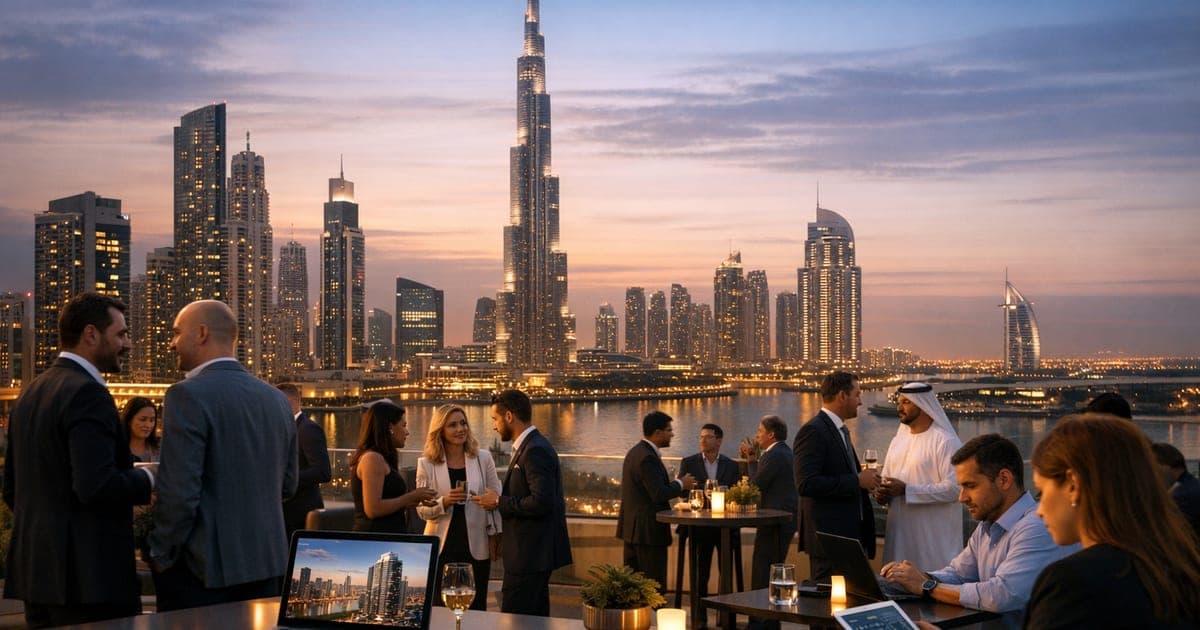
Dubai’s real estate market isn’t just growing; it’s getting more data-driven. Dubai Land Department (DLD) hosted PropTech Connect Middle East 2026 on February 4–5, 2026, putting AI, digital workflows, and next-generation investment models at the center of the conversation.
For buyers, renters, and investors, this matters because the “winning” strategy in 2026 is increasingly about verification, speed, and smarter decision-making—not just finding a nice unit.
Why PropTech Connect 2026 is a high-intent signal (not just another conference)
DLD’s agenda for PropTech Connect Middle East 2026 focused on themes like technology, AI, governance, sustainability, and evolving investment models. That’s a strong indicator of where the regulator and the broader ecosystem are pushing the market next: toward more transparent, trackable, and standardized real estate processes.
In plain terms: Dubai is accelerating toward a property market where buyers can verify more, faster, and where serious investors will rely on better data to pick the right building, developer, and exit plan.
What this changes for Dubai property buyers in 2026
If you’re buying in Dubai this year, the tech shift is likely to show up in your journey in three practical ways:
- Faster transactions: More steps moving online means less friction (and fewer delays) when you’re ready to commit.
- Stronger due diligence expectations: As verification tools improve, “trust me” listings become less acceptable—and buyers will increasingly expect proof.
- More pricing clarity at the building level: Dubai’s market is already moving toward building-specific benchmarking in rentals and valuation logic, which can influence how buyers assess fair value and future rentability.
Actionable tip: Before you reserve a unit, ask for a due diligence pack that includes building/community service charges, realistic rent comps for the same building (not just the area), and the seller’s timeline/constraints. In a faster market, the buyer who prepares first negotiates better.
What this means for investors: the edge shifts from “where” to “how”
Dubai investors often focus on location first—and location still matters. But in 2026, the advantage increasingly comes from execution:
- How well you verify the asset (developer track record, handover risk, service charges, building quality)
- How quickly you can finance and close (especially on competitively priced resale units)
- How you plan your exit (resale liquidity, tenant demand depth, and whether the building stays competitive as new supply hands over)
Actionable tip: If you’re targeting ROI, don’t underwrite your deal using “area average” rents alone. Underwrite using building-level reality: maintenance quality, amenities, parking, and management reputation can make two towers in the same community perform very differently.
Neighborhood strategy: where proptech momentum can show up first
Proptech adoption tends to show up fastest where transaction volume is high and buyer profiles are more international and data-driven. In Dubai, that often means:
- High-liquidity apartment markets (where resale activity is frequent and pricing is competitive)
- Master-planned communities (where management systems, service charge governance, and standardized processes are more mature)
- Prime + branded residence clusters (where buyers expect premium service, clearer reporting, and smoother ownership experiences)
Actionable tip: When comparing two neighborhoods with similar prices, choose the one with stronger operational transparency: clearer service charge history, better building management, and more consistent transaction evidence.
A practical checklist: how to buy smarter in Dubai’s “tech-forward” market
Use this checklist to align your purchase process with where Dubai is heading:
- Verify listing legitimacy: confirm the unit status, seller authority, and documentation before you negotiate hard.
- Model total cost of ownership: include service charges, maintenance, insurance, and vacancy assumptions.
- Stress-test financing timelines: have your mortgage pre-approval and cash budgeting ready so you can move quickly on the right unit.
- Compare building-level performance: prioritize buildings with stable tenant demand and strong management over “hyped” communities.
- Plan your exit on day one: decide whether you’re optimizing for resale in 2–4 years or yield over 7–10 years.
Conclusion: what BrokeryHero clients should do next
PropTech Connect Middle East 2026 is a clear signal that Dubai’s property market is becoming more transparent, digital, and verification-led. That’s good news for serious buyers and investors—but it also raises the standard for how you evaluate deals.
If you want help shortlisting buildings with strong fundamentals, sanity-checking pricing, and building a buyer plan that fits Dubai’s 2026 reality, BrokeryHero can guide you from search to closing with a strategy-first approach.
Stay in the loop
Get the latest articles delivered every week.
By subscribing, you agree to receive blog updates. Unsubscribe anytime.
More from this category
Oct 9, 2026
Oct 7, 2026
Oct 5, 2026
Oct 2, 2026

Sep 30, 2026

Sep 28, 2026
Sep 25, 2026
Sep 23, 2026
Sep 21, 2026
Sep 18, 2026