
Market Analysis & Updates
Dubai Harbour Bridge: What Faster SZR Access Means for 2026 Property Buyers
Florian
•July 17, 2026
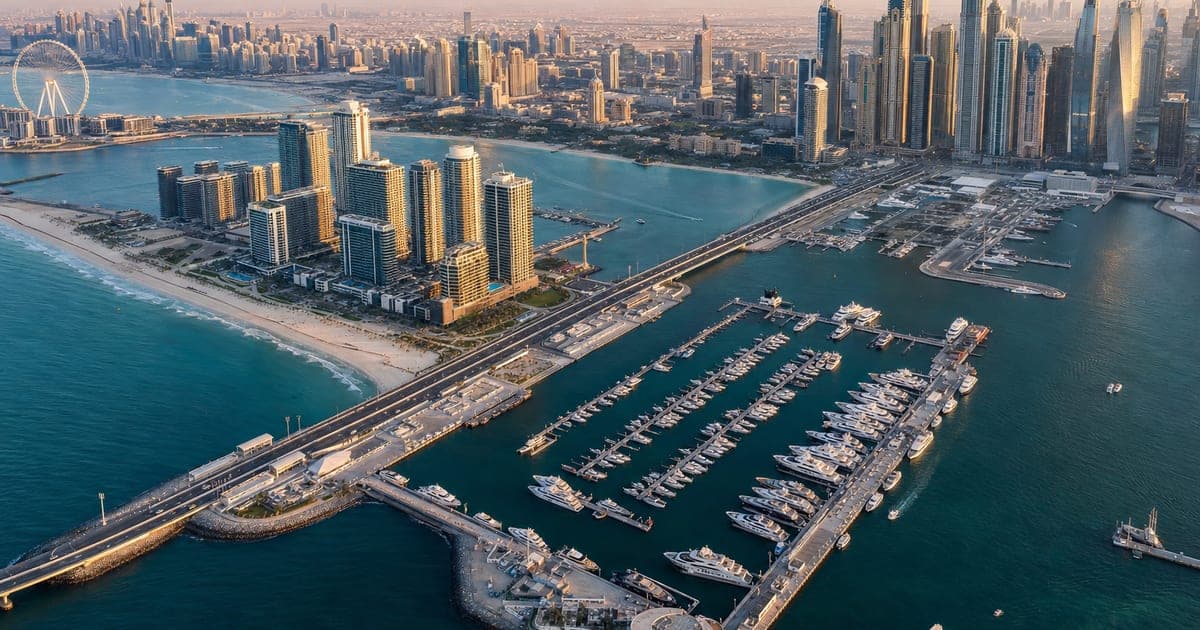
Dubai property buyers often talk about views, payment plans and developer brands. In 2026, access is just as important. The latest example is the Dubai Harbour bridge, a 1,500-metre connection between Sheikh Zayed Road and Dubai Harbour that the Roads and Transport Authority said had reached 90% completion in June 2026.
For anyone comparing Dubai Harbour, Emaar Beachfront, Dubai Marina, JBR, Palm Jumeirah or nearby Media City, this is not just a road story. It changes the practical buying question from is the address beautiful? to will the daily drive, guest access, rental appeal and resale story support the price?
The search intent here is clear: buyer and investor insight. This guide explains what the new access may mean, what not to overpay for, and how BrokeryHero would assess the area before a buyer commits.
What the Dubai Harbour bridge actually changes
According to RTA, the project includes a 1,500-metre bridge with two lanes in each direction, linking Interchange 5 on Sheikh Zayed Road near the American University in Dubai through key junctions toward Dubai Harbour Street. RTA said the bridge will have capacity of up to 6,000 vehicles per hour in both directions and is intended to reduce journey time from 12 minutes to 3 minutes once operational.
That matters because Dubai Harbour sits in one of Dubai’s busiest lifestyle corridors. It benefits from the pull of Dubai Marina, JBR, Palm Jumeirah, Bluewaters, Media City and the broader beachfront economy, but access has historically been a key point buyers and tenants test at peak times.
RTA’s published timeline said traffic from Sheikh Zayed Road toward Dubai Harbour would open in June 2026, with traffic from Dubai Harbour toward Al Naseem Street and the new bridge link toward King Salman bin Abdulaziz Al Saud Street and Al Naseem Street following in July. For buyers viewing units in July and August 2026, that means the real test is not the brochure map. It is the live commute during school run, office peak, weekend brunch traffic and event days.
Why this matters for Dubai Harbour and Emaar Beachfront buyers
Dubai Harbour and Emaar Beachfront are premium waterfront plays. Buyers are not only purchasing square footage; they are buying beach access, marina proximity, hotel-style amenities, skyline views, and the ability to move between the coast and the city without friction.
Visit Dubai describes Dubai Harbour as a seafront district in Dubai Marina with a major cruise terminal and the region’s largest marina. Shamal has also positioned Dubai Harbour around yacht, hospitality, dining and residential experiences. This gives the district a lifestyle story that is stronger than a standalone tower market.
The bridge strengthens that story in three practical ways. First, it can improve confidence among end-users who want waterfront living without feeling cut off from Sheikh Zayed Road. Second, it may help landlords and short-term rental operators because guests and tenants tend to value easy airport, Downtown, DIFC, Marina and Palm access. Third, it gives sellers a clearer resale narrative: beach and marina lifestyle with better road connectivity.
But buyers should be careful. Infrastructure can support demand, but it does not automatically justify any asking price. In a market where many premium buyers are more selective, the best units will still need the right view, layout, parking, service charge profile, building quality and realistic comparable sales.
Impact on Dubai Marina, JBR and Palm Jumeirah comparisons
The bridge does not only affect Dubai Harbour. It also changes the comparison set for buyers who are deciding between Dubai Marina, JBR, Emaar Beachfront and Palm Jumeirah.
Dubai Marina remains one of Dubai’s most liquid apartment markets. Bayut’s H1 2026 sales report listed Dubai Marina among the popular choices for luxury apartment buyers, with reported average luxury apartment price per square foot of AED 2,111 and ROI of 5.88%. Bayut also reported Palm Jumeirah as an ultra-luxury villa market with a much higher average price per square foot, reflecting its different product mix and scarcity profile.
For a buyer, the decision is not simply which area is more prestigious. It is which area matches the use case:
- Dubai Harbour and Emaar Beachfront: best for buyers prioritising new-build waterfront living, marina access, private beach lifestyle and future destination growth.
- Dubai Marina: best for buyers prioritising liquidity, established restaurants, Metro and Tram proximity, walkability and a deep rental pool.
- JBR: best for beach-facing lifestyle, tourism demand and a mature community feel, but buyers must inspect building age and parking practicality carefully.
- Palm Jumeirah: best for trophy ownership, villas, branded residences and scarcity-led positioning, but entry prices and service charges need close scrutiny.
The new bridge may narrow the convenience gap for Dubai Harbour, but it does not erase the advantages of established districts. Marina has proven liquidity. Palm has global recognition. JBR has mature beachfront footfall. Dubai Harbour’s opportunity is that it combines a newer destination feel with improving infrastructure.
Investor angle: access premium versus overpricing risk
Infrastructure-driven value is real in Dubai, but it is rarely instant or evenly distributed. The properties most likely to benefit are those where the bridge solves a genuine user problem: difficult access, taxi delays, visitor friction or peak-hour congestion.
Betterhomes’ Q2 2026 report showed a more selective market, with residential transactions down year on year, off-plan accounting for a large share of activity, and buyer enquiries lower while cash buyers became more prominent. That context is important. Buyers are still active, but they are asking harder questions.
For investors, the correct approach is to separate access improvement from price speculation. A better road can improve tenant appeal, viewing conversion and exit confidence. It cannot fix a poor floor plan, blocked view, weak building management, unrealistic rent assumption or excessive premium above comparable transactions.
Before buying in Dubai Harbour or Emaar Beachfront, investors should request recent comparable sales in the same building or closest delivered projects, not just developer launch prices. They should also compare annual service charges, parking allocation, furnishing costs, snagging risk, handover status and expected rental competition from nearby new units.
Buyer checklist before paying a Dubai Harbour premium
If the bridge is part of the reason you are buying, test the benefit like a resident, not like a tourist. A viewing at 11 a.m. can make any waterfront address feel easy. The real value appears during the times people actually live, work and move.
- Drive from Sheikh Zayed Road to the building during morning and evening peak hours.
- Check the reverse route from Dubai Harbour toward Al Naseem Street, King Salman bin Abdulaziz Al Saud Street and Dubai Marina.
- Ask whether the unit has one or more allocated parking spaces and how visitor parking works.
- Compare the building’s service charges with Dubai Marina and Palm Jumeirah alternatives.
- Inspect views for future obstruction risk, especially in master-planned waterfront districts.
- Review actual rental listings and recently achieved rents, not only advertised annual rent.
- For off-plan or near-handover units, read the SPA, completion terms, defect liability period and handover payment schedule.
End-users should also think about schools, office commute, grocery access, maid room requirements, pet policies and weekend traffic. Investors should model a conservative rent, vacancy period, furnishing budget and resale fee. A better bridge can make a good unit stronger. It should not be the only reason to buy.
Practical caveats for renters, landlords and short-term rental owners
For renters, improved access may make Dubai Harbour and Emaar Beachfront more attractive if prices soften or landlords become more flexible. But tenants should still compare total living cost: rent, chiller, parking, commute time, delivery access and beach or amenity rules.
For landlords, the bridge could improve marketability, particularly for furnished apartments aimed at executives, remote workers, seasonal residents and short-stay guests. However, Q2 2026 leasing data suggests tenants have more room to negotiate in parts of Dubai as supply increases. That means presentation, maintenance and pricing discipline matter more than ever.
For short-term rental investors, the location story is strong: beachfront, marina, cruise terminal, Palm proximity and Dubai Marina nightlife nearby. The caveat is competition. A premium waterfront district attracts many furnished units, so occupancy depends on reviews, management quality, furnishing standard, building rules and realistic nightly rates.
Bottom line: buy the unit, not just the bridge
The Dubai Harbour bridge is a timely, material infrastructure upgrade for one of Dubai’s most visible waterfront corridors. It supports the investment case for Dubai Harbour and Emaar Beachfront, and it gives buyers another reason to compare the area seriously against Dubai Marina, JBR and Palm Jumeirah.
Still, the smartest 2026 buyers will not pay blindly for an access headline. They will test commute times, compare real transactions, inspect building quality and model rental income conservatively. Infrastructure is a tailwind, not a guarantee.
If you are deciding between Dubai Harbour, Emaar Beachfront, Dubai Marina or Palm Jumeirah, BrokeryHero can help you turn the headline into a practical shortlist: the right building, the right unit, the right price, and the right exit plan.
Sources
- RTA Completes 90% of Bridge Development Project Leading to Dubai Harbour Entry and Exit Points
- Bayut Dubai Sales Market Report H1 2026
- Q2 2026 Dubai Residential Market Report
- Dubai Harbour | Visit Dubai
- Dubai Land Department: Dubai’s real estate transactions surge 31% to reach AED 252 billion in Q1 2026
Stay in the loop
Get the latest articles delivered every week.
By subscribing, you agree to receive blog updates. Unsubscribe anytime.
More from this category
Oct 9, 2026
Oct 7, 2026
Oct 5, 2026
Oct 2, 2026

Sep 30, 2026

Sep 28, 2026
Sep 25, 2026

Sep 23, 2026
Sep 21, 2026

Sep 18, 2026