Market Analysis & Updates
Latifa bint Hamdan Corridor: What Dubai Property Buyers Should Watch Before 2028
Florian
•July 15, 2026
Search intent: investor insight and buyer guide.
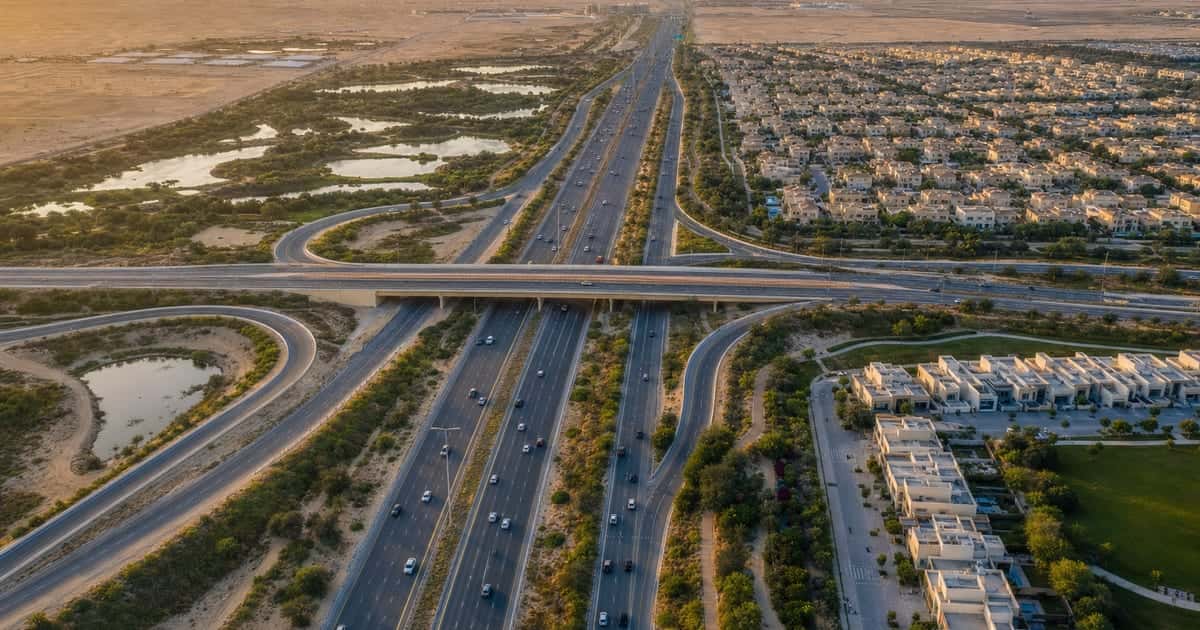
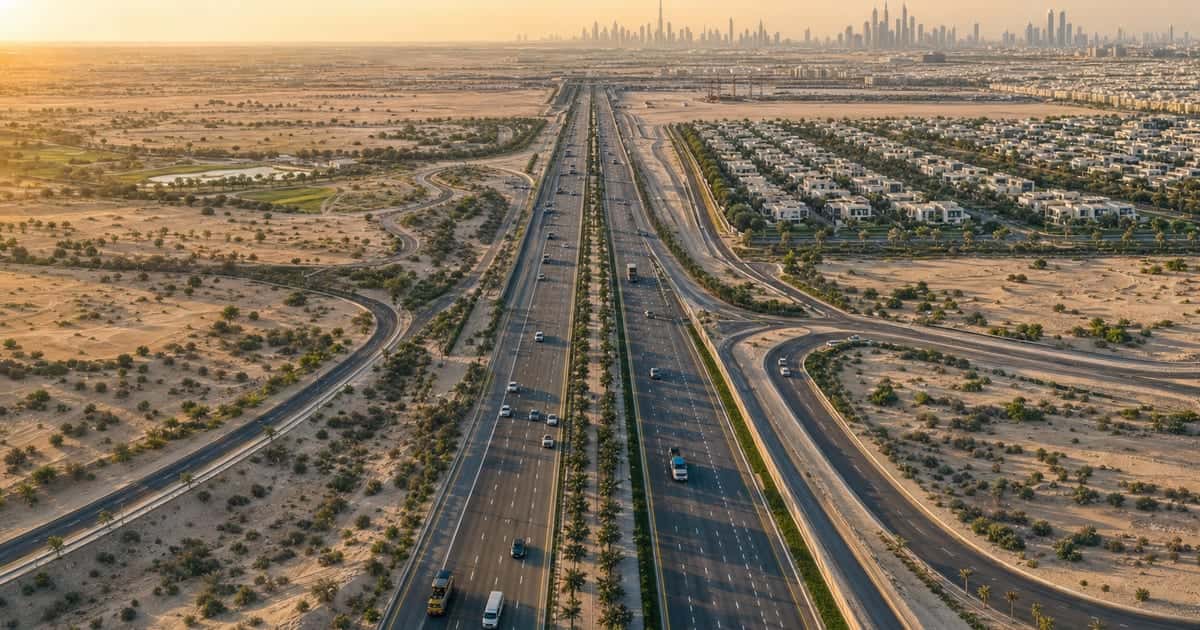
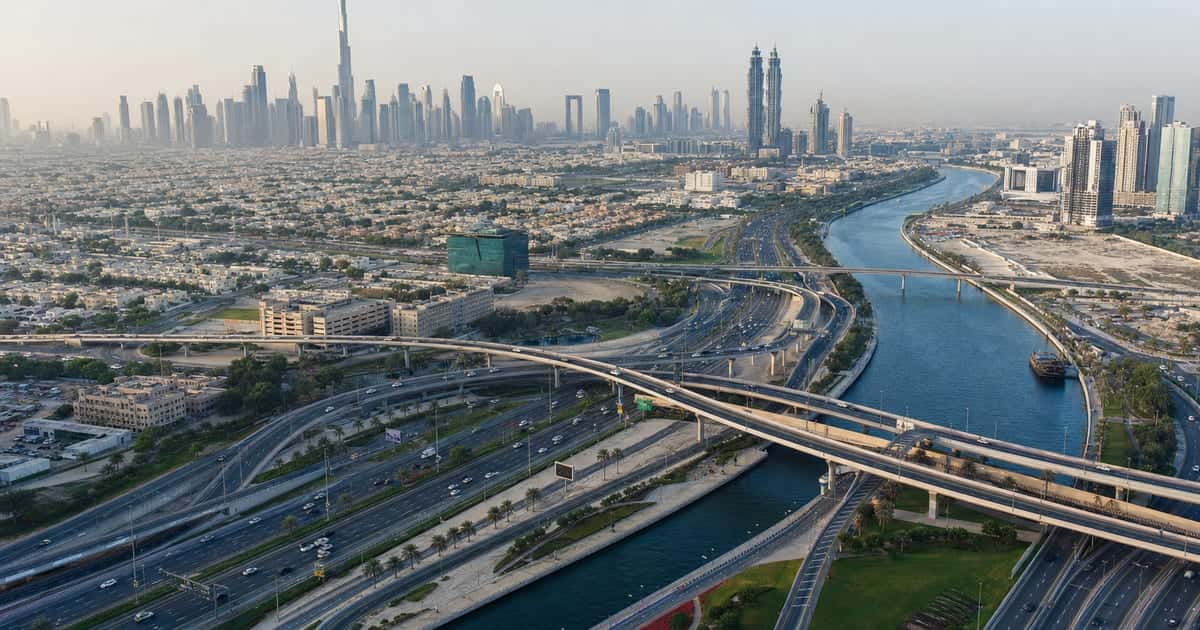
Dubai property buyers often look at price, developer reputation, service charges and handover dates. In 2026, there is another factor that deserves serious attention: road infrastructure. On 12 July 2026, Dubai’s Roads and Transport Authority announced the award of an AED 2 billion contract for the Latifa bint Hamdan Corridor Development Project, a 12 km strategic road corridor expected to be completed by the end of 2028.
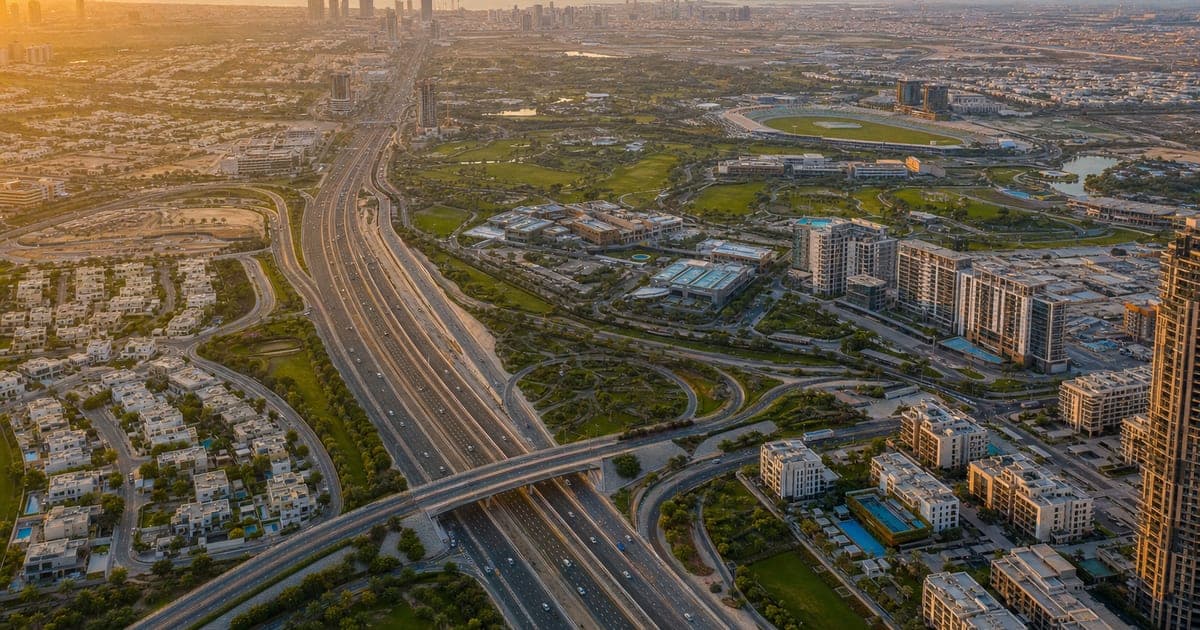
This is not just another road upgrade. The corridor is designed to connect Sheikh Zayed Road, Al Khail Road, Al Meydan Street, Sheikh Mohammed bin Zayed Road, Sheikh Zayed bin Hamdan Al Nahyan Street and Emirates Road. For property buyers, renters and investors, that means the project could change how people compare established communities such as Dubai Hills Estate and Nad Al Sheba with growing areas around Majan, Living Legends, Mohammed Bin Rashid Gardens and Global Village.
The key word is could. Infrastructure can support long-term demand, but it does not automatically make every nearby property a good buy. The smart move is to understand the corridor, identify the communities that may benefit, and avoid paying tomorrow’s premium too early.
What Dubai announced in July 2026
According to Dubai’s official announcement, the Latifa bint Hamdan Corridor will extend approximately 12 km and cost AED 2 billion. The project includes seven bridges with a combined length of 2,300 metres, eight tunnels covering 900 metres, and an expansion of Latifa bint Hamdan Street to four lanes in each direction.
RTA says the corridor is expected to handle around 16,000 vehicles per hour in both directions and more than 130,000 trips per day. It is also expected to reduce travel time between Umm Al Sheif Street and Emirates Road from 33 minutes to 15 minutes, a 54% reduction.
For daily life, that is the practical part. The corridor is planned to improve east-west connectivity across Dubai, easing movement between inland residential districts, business areas, schools, leisure destinations and major highways. It also includes 12.5 km of cycling tracks designed to connect with the existing network from Al Qudra to Jumeirah.
The completion target is the end of 2028. That matters for buyers considering off-plan projects with handovers around 2027 to 2029, because transport access may look very different by the time residents move in.
Why this corridor matters for Dubai real estate decisions
In Dubai, access can be a major value driver. A property that looks affordable on paper can feel expensive if the commute is painful, while a slightly higher purchase price can be justified when a home reduces daily travel time, school runs or cross-city movement.
The Latifa bint Hamdan Corridor matters because it touches several buyer priorities at once:
- Commute convenience: better movement between Emirates Road, Sheikh Mohammed bin Zayed Road, Al Khail Road and Sheikh Zayed Road can make inland communities more practical for end-users.
- End-user appeal: families often pay more attention to road access, school routes, parks and retail than short-term investors do.
- Rental resilience: tenants may prefer areas where road access improves, especially if rents are still more reasonable than ultra-prime central Dubai.
- Off-plan timing: projects completing close to 2028 may benefit from improved infrastructure by handover, but buyers must still verify project quality and pricing.
- Liquidity: communities with better road links can be easier to resell, but only when the entry price is sensible.
This comes against a still-active Dubai property market. Dubai Land Department reported AED 252 billion in total real estate transactions in Q1 2026, up 31% year on year, while the Central Bank of the UAE’s June 2026 review said Dubai maintained strong growth momentum in early 2026, with transaction value up 30.3% year on year in Q1. Infrastructure is therefore arriving into a market that already has strong investor participation, not into a quiet market waiting for one catalyst.
Communities buyers should watch along the route
RTA specifically identified several existing and future residential and development areas served by the corridor, including Nad Al Sheba, Al Barari, Dubai Hills, Dubai District One, Mohammed Bin Rashid Gardens, Living Legends, Majan and Global Village, along with areas around Latifa bint Hamdan Street and Al Meydan Street.
Dubai Hills Estate is already a mature, high-demand master community with villas, townhouses and apartments. The corridor may strengthen its accessibility story, but buyers should be careful: Dubai Hills already prices in a strong lifestyle premium due to schools, parks, mall access, green space and established demand. Do not buy there only because of the new road.
Nad Al Sheba may be one of the more interesting end-user locations to watch. It sits close to Meydan, Downtown Dubai and major road links, but parts of the wider area still feel more emerging than fully mature. Improved connectivity can help family buyers who want larger homes, quieter streets and access to central Dubai without choosing a dense high-rise district.
Al Barari is a different case. It is already positioned as a premium green community with limited supply and a distinctive lifestyle. Better surrounding connectivity may support convenience, but pricing is driven heavily by scarcity, villa quality and the community’s established luxury identity.
Majan, Living Legends and areas around Global Village are more sensitive to access improvements because they compete on relative value. If the corridor makes commutes easier, these areas could appeal to renters and buyers priced out of more central communities. However, investors should pay close attention to building quality, service charges, occupancy trends and upcoming supply.
District One and Mohammed Bin Rashid Gardens should be assessed as premium and future-facing locations. Buyers need to separate the long-term masterplan appeal from the actual handover date, payment plan, access at completion and comparable ready-home prices.
A practical playbook for buyers and investors
If you are considering property near the Latifa bint Hamdan Corridor, do not make the mistake of treating every nearby listing as an infrastructure winner. Use the corridor as one part of your due diligence.
- Map the actual access point: being in the same general area is not enough. Check how the building or villa cluster connects to the new corridor, Al Khail Road, Meydan Street and Emirates Road.
- Compare today’s commute with the projected benefit: if you are buying to live in the property before 2028, make sure today’s access still works for your routine.
- Check school and office routes: families should test morning drives to schools in Dubai Hills, Al Barsha, Meydan, Nad Al Sheba and surrounding areas.
- Review service charges and maintenance: improved roads do not fix weak building management or high recurring costs.
- Look at ready alternatives: compare off-plan pricing with ready homes in Dubai Hills, Meydan, Nad Al Sheba, Majan and Dubailand before accepting a launch premium.
- Do not overpay for marketing language: phrases like near the corridor or minutes from Dubai Hills need to be verified on a map.
For investors, the cleanest opportunity may not be the most hyped launch. It may be a well-priced apartment or townhouse in a community where the commute discount is still visible today but could narrow once access improves. That is where careful negotiation and comparable sales matter.
Caveats before pricing in the 2028 upside
The Latifa bint Hamdan Corridor has a clear completion target, but buyers should still be disciplined. Road projects can change how people move, yet property values depend on multiple factors: purchase price, supply, interest rates, building quality, community maturity, rental demand and exit liquidity.
There may also be temporary disruption during construction. If you are buying a ready home nearby, ask about access routes, noise, diversions and expected construction phases. For landlords, short-term inconvenience may affect tenant perception even if the long-term result is positive.
Another caveat is supply. Parts of inland Dubai have a large pipeline of apartments, townhouses and villa communities. Better infrastructure can help absorb supply, but it does not guarantee strong rental growth in every building. In a competitive rental market, tenants compare not only commute time but also amenities, finishing, parking, chiller costs, maintenance response and cheque flexibility.
Finally, infrastructure-led demand often appears first in asking prices. Sellers and developers may increase prices before the benefit is fully delivered. If the premium is already too high, the buyer carries more risk. A good property decision should still make sense under conservative rent and resale assumptions.
Conclusion: use the corridor as a filter, not a shortcut
The Latifa bint Hamdan Corridor is one of Dubai’s most important July 2026 infrastructure announcements for property decision-making. With AED 2 billion committed, a 12 km route, major highway connections and a 2028 completion target, it deserves attention from buyers, renters and investors watching Dubai Hills, Nad Al Sheba, Al Barari, Majan, Living Legends, District One and the wider Meydan-Dubailand belt.
But the best decisions will come from combining infrastructure insight with property-level due diligence. Do not buy a weak unit just because it is near a future road. Do look carefully at well-priced homes where improved access, community maturity and realistic rental demand line up.
BrokeryHero’s view is simple: Dubai infrastructure can create powerful long-term property advantages, but only when buyers stay practical, compare real numbers and avoid paying too much for a future that is not yet fully delivered.
Sources
- RTA Awards AED 2bn Contract for 12km Latifa bint Hamdan Corridor Project
- RTA kicks off traffic ‘Quick Wins’ at 28 Locations across Dubai
- Dubai’s real estate transactions surge 31% to reach AED 252 billion in Q1 2026
- Central Bank of the UAE Quarterly Economic Review, June 2026
- UAE & Dubai Real Estate Market Report 2025
Stay in the loop
Get the latest articles delivered every week.
By subscribing, you agree to receive blog updates. Unsubscribe anytime.
More from this category
Oct 9, 2026
Oct 7, 2026
Oct 5, 2026

Oct 2, 2026

Sep 30, 2026

Sep 28, 2026
Sep 25, 2026

Sep 23, 2026
Sep 21, 2026

Sep 18, 2026