
Market Analysis & Updates
Etihad Rail Dubai Station: What Jumeirah Golf Estates Means for 2026 Property Buyers
Florian
•July 10, 2026
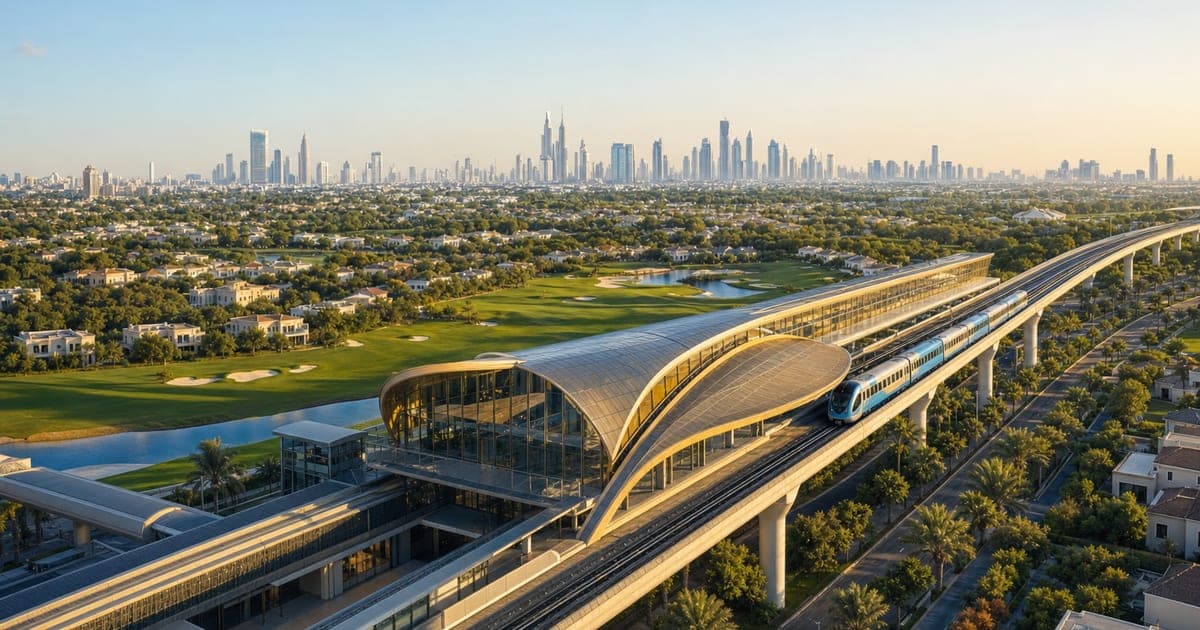
Dubai’s next major property story is not another tower launch. It is mobility. Etihad Rail has moved from a long-discussed national infrastructure project to a live passenger network, and Dubai’s station is scheduled to open at Jumeirah Golf Estates on 30 September 2026.
For Dubai property buyers, renters and investors, that date matters. Jumeirah Golf Estates is already a premium villa-led community with a Dubai Metro station nearby. The arrival of Etihad Rail adds inter-emirate connectivity, and the planned Dubai Metro Gold Line later strengthens the area’s role as a transport interchange.
But this is not a simple “buy anything near the station” signal. The smarter question is: who will actually use the station, which communities benefit from the last-mile connection, and how much of the future upside is already priced in?
What Changed in June 2026?
On 23 June 2026, Etihad Rail confirmed the phased passenger launch schedule. The introductory operational phase between Abu Dhabi and Fujairah began on 30 June 2026, with Dubai Train Station and Al Dhaid Train Station scheduled to open with the official launch on 30 September 2026. Al Dhafra stations are scheduled for 30 December 2026, and Sharjah Train Station is scheduled for 30 March 2027.
That makes the Dubai station more than a future promise. It is part of the first wave of national rail passenger expansion. Etihad Rail has also positioned passenger rail as a practical option for work, family and leisure travel between emirates, not as a replacement for cars but as an additional mobility choice.
For real estate, the key point is predictability. A rail station can change how households think about where to live if it makes cross-emirate movement more reliable. This is especially relevant for residents with work, family or business commitments between Dubai, Abu Dhabi, Sharjah and Fujairah.
Why Jumeirah Golf Estates Is the Station to Watch
Jumeirah Golf Estates is not a typical transit-led community. It is a mature, low-density, golf-focused residential area known for villas, landscaping and a quieter family environment. That makes the rail story more nuanced than it would be in a dense apartment district.
The station’s real importance is its position within a growing transport cluster. Jumeirah Golf Estates already has access to the Dubai Metro Route 2020 corridor. Dubai’s approved Gold Line is also planned to integrate with Etihad Rail and connect with the Red Line at Jumeirah Golf Estates, with inauguration scheduled for 9 September 2032. The Gold Line was approved as a 42 km, 18-station project, and official Dubai communications say it will connect several strategic districts including Business Bay, Meydan, JVC and Jumeirah Golf Estates.
The National reported that a footbridge is being built between the Metro and Etihad Rail stations, which would make the location a more meaningful public transport interchange rather than a standalone rail stop. That matters for both residents and investors because the value of rail is not only the station itself; it is how easy it is to reach the station without turning every journey into a car trip.
Will Etihad Rail Push Up Property Prices Immediately?
Buyers should be careful here. Transport infrastructure often supports long-term desirability, but immediate price jumps are not guaranteed. In Jumeirah Golf Estates, much of the connectivity story has been visible for some time, and premium villa communities often behave differently from high-density apartment markets.
For end-users, the benefit is lifestyle resilience. If you love the community, the station may make the location easier to justify for a household that travels across the UAE. If you already own there, it may support liquidity over time by expanding the buyer pool. But paying a large premium purely because of Etihad Rail could be risky, especially if comparable villas in nearby communities offer better value.
For investors, the stronger opportunity may be in the wider catchment rather than only inside Jumeirah Golf Estates. Areas that can connect efficiently to the station, the Metro, Sheikh Mohammed Bin Zayed Road and future Gold Line stops may see more practical tenant demand than communities that are technically nearby but awkward to access.
Communities Buyers Should Compare Around the Rail Effect
Instead of treating Jumeirah Golf Estates as the only play, compare the station’s likely influence across a wider southwest Dubai corridor. Different buyers will read the same infrastructure differently.
- Jumeirah Golf Estates: Best suited to end-users seeking villas, greenery and a quieter family setting. The rail station strengthens connectivity, but prices may already reflect much of the premium lifestyle appeal.
- Dubai Sports City: Worth watching for renters and buyers who want apartment and townhouse options near the Jumeirah Golf Estates side of Dubai without paying pure golf-community pricing.
- Jumeirah Village Circle: The future Gold Line route makes JVC relevant for investors focused on apartment liquidity, but buyers should be selective because supply and building quality vary widely.
- Dubai Production City and Motor City: These can appeal to residents who want more space or lower entry costs than prime villa districts, provided the daily drive to the rail or Metro connection is realistic.
- Dubai Investment Park and Al Furjan: These areas already sit on important south Dubai mobility corridors and may suit households balancing Dubai, Expo City, Dubai South and Abu Dhabi travel patterns.
The practical test is not distance on a map. It is door-to-platform time during the hours you actually travel. A property that is 12 minutes from the station with easy parking or feeder access may be more useful than one that looks closer but involves congestion, awkward turns or limited transport links.
Buyer and Investor Checklist Before Paying a Rail Premium
Etihad Rail improves the long-term story for this part of Dubai, but due diligence still matters. Before buying near Jumeirah Golf Estates, ask the following:
- Who is the tenant or buyer? A family buying a villa, an Abu Dhabi commuter renting an apartment, and an investor seeking short-term appreciation all need different assets.
- What is the last-mile plan? Check walking routes, parking, taxi access, Metro connection and expected congestion around the station area.
- Is the premium already priced in? Compare recent transaction levels, not just asking prices, and avoid emotional bidding based on infrastructure headlines.
- How strong is the building or community? Rail access will not fix weak maintenance, high service charges, poor layouts or low-quality handover standards.
- What is the holding period? Infrastructure-led value often works best over years, not weeks. Short-term flipping is much harder to justify when the market is selective.
- Could construction or traffic affect livability? Station works, road changes and future Gold Line activity may be positive long term but inconvenient in the near term.
For off-plan buyers, add one more layer: do not let “near Etihad Rail” replace a proper project review. Check the developer’s track record, escrow registration, payment plan risk, handover timing, comparable resale values and rental competition in the same micro-market.
What Renters Should Do Before Moving Near the Station
Renters may be the first group to test the real value of the station. If the Dubai Etihad Rail station makes commuting to Abu Dhabi or visiting other emirates easier, some tenants may be willing to pay more for convenience. Others may still prefer private cars if fares, schedules or last-mile access do not fit their routine.
Before signing a tenancy contract, visit the area at peak times. Test the route from the building or villa to the station. Check whether the community has enough parking, whether taxis are easy to get, and whether the Metro link is practical in summer. Also compare rents with similar homes in Sports City, Al Furjan, Motor City, JVC and Dubai Production City before assuming Jumeirah Golf Estates is the only logical choice.
Families should also look beyond transport. Schools, nurseries, supermarkets, clinics, commute to the office and weekend lifestyle still drive satisfaction. Rail access is a strong advantage, but it is one line item in a full relocation decision.
Bottom Line: A Strong Long-Term Signal, Not a Shortcut
Etihad Rail’s Dubai station at Jumeirah Golf Estates is one of the most important 2026 infrastructure events for Dubai real estate. It strengthens the southwest corridor, improves the long-term case for connected communities, and adds a new layer to how residents can move across the UAE.
The best property decisions, however, will be selective. Focus on real access, real tenant demand, transaction evidence and asset quality. The winners are unlikely to be every property with “Etihad Rail” in the listing description. They will be homes and investments where connectivity, pricing, community quality and holding strategy all line up.
BrokeryHero helps Dubai buyers, renters and investors read these shifts with a practical lens: not just what is being announced, but what it means for the property you are actually considering.
Sources
- Etihad Rail: Khaled bin Mohamed bin Zayed inaugurates MBZ City Passenger Train Station and witnesses unveiling of UAE passenger rail network
- Etihad Rail Passenger: A new way to move across the UAE
- The National: Dubai's Etihad Rail station set to create one of city's best-connected communities
- Protocol Dubai: Mohammed bin Rashid approves Dubai Metro’s Gold Line spanning 42 km, 18 stations
Stay in the loop
Get the latest articles delivered every week.
By subscribing, you agree to receive blog updates. Unsubscribe anytime.
More from this category
Oct 7, 2026
Oct 5, 2026
Oct 2, 2026

Sep 30, 2026

Sep 28, 2026
Sep 21, 2026
Sep 18, 2026
Sep 16, 2026
Sep 14, 2026
Sep 11, 2026
