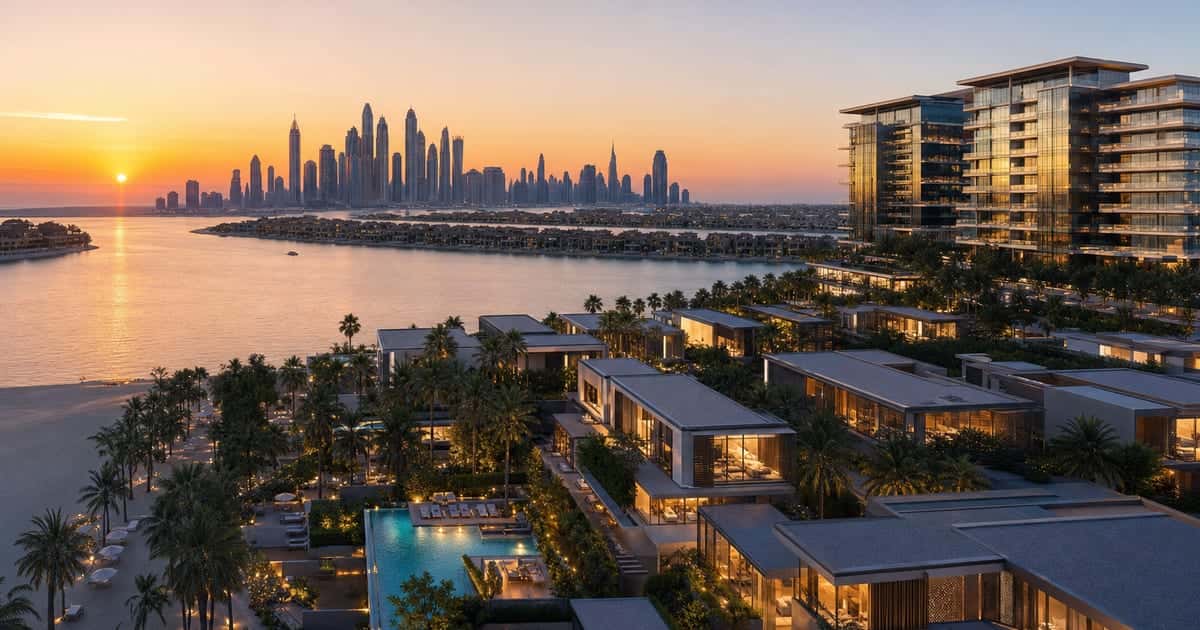

Dubai Properties
Dubai 2-Year Property Investor Visa Update: What the New No-Minimum Rule Means for Buyers
Florian
•May 20, 2026
Dubai has made a timely change that matters for entry-level buyers, overseas investors and residents weighing rent versus buy decisions. In late April 2026, Dubai’s two-year property investor residency rules were updated so that an individual property owner may apply for the visa regardless of the property value. For joint ownership, each co-owner must hold a share of at least AED 400,000.
This is not the same as the 10-year Golden Visa, and it does not turn every cheap listing into a smart investment. But it does change the buying calculation for people considering studios, affordable one-bed apartments and completed units in areas such as International City, Discovery Gardens, Liwan, Dubai Silicon Oasis, Arjan, Jumeirah Village Circle and Dubai Sports City.
The search intent here is practical: if you want Dubai residency through property ownership, should this update influence what you buy, where you buy and how you structure ownership? Here is the BrokeryHero breakdown.
What Changed in the Dubai 2-Year Property Investor Visa?
The core change is simple but important. Dubai Land Department’s Investor Residence Application service now states that for individual ownership, the property owner may apply for the residency visa regardless of the property value. For joint ownership, a co-owner may apply if their share value is not less than AED 400,000.
Previously, the market widely worked around a minimum property value threshold of AED 750,000 for this two-year property-linked route. That meant many buyers looking at lower-ticket completed apartments could own property in Dubai but still fall short of the residency requirement. The new wording removes that specific barrier for sole owners.
The DLD service also makes clear that this is a two-year residence permit linked to property ownership in Dubai, with the possibility to sponsor a spouse and children subject to eligibility and documentation. The application requires, among other items, a passport, electronic title deed, personal photograph, Emirates ID if available, current residence visa or entry permit if available, and a Dubai Police good conduct certificate addressed to DLD.
DLD’s service page lists an investor visa fee of AED 10,212.50 and a service time of 7 to 10 business days. Fees and procedures can change, so buyers should always verify directly with DLD Cube or an authorised service channel before committing to a purchase based mainly on visa eligibility.
Why This Matters for Dubai Property Buyers Under AED 750,000
The biggest impact is likely to be felt in Dubai’s completed, lower-ticket apartment segment. A buyer who wants a practical foothold in Dubai may no longer need to stretch to a higher price point just to satisfy the old two-year investor visa threshold.
That can affect three buyer groups in particular:
- Overseas buyers who want a UAE residence option before relocating full-time.
- Tenants in Dubai who are close to buying but do not want to commit to a large mortgage or premium community.
- Small-ticket investors targeting rental income from studios and one-bedroom apartments in established freehold areas.
However, the rule should not be read as a green light to buy the cheapest unit available. A low entry price can come with trade-offs: older buildings, higher maintenance needs, weaker resale liquidity, limited parking, long vacancy periods or service charges that dilute net yield. The better question is not, “What is the cheapest property that may support residency?” It is, “Which property still makes sense if the visa benefit disappears, changes or takes longer than expected?”
In practice, buyers should look for completed buildings with real rental demand, clean title, reasonable service charges, good access to metro or main roads, and enough recent transaction evidence to benchmark value. In lower-ticket communities, building selection often matters more than community selection.
How Joint Ownership Changes the Strategy
The update is especially important for couples, family buyers and friends considering a shared purchase. Under the updated DLD service terms, joint ownership is not treated the same way as sole ownership. Each co-owner needs a share value of at least AED 400,000 to apply in their own right.
That means a AED 600,000 apartment bought 50/50 by two unrelated buyers may be useful as an investment, but it may not give both owners an independent two-year property investor visa because each share would be AED 300,000. A AED 800,000 property split equally is a different case because each share would be AED 400,000.
For married couples, family sponsorship may be more practical than trying to make both names independently eligible, depending on the ownership split, documentation and family plans. But this is exactly where buyers should avoid assumptions. Ownership structure affects visa eligibility, estate planning, financing, resale decisions and sometimes home-country tax reporting.
Before signing a sale agreement, ask these questions:
- Will the property be held by one person or multiple owners?
- If there are multiple owners, what is each registered share value?
- Does the title deed name match the passport exactly?
- Is the buyer relying on their own visa, or will dependants be sponsored?
- Is the unit mortgaged, developer-financed or fully paid?
- Has DLD Cube or a qualified adviser confirmed the current document requirements?
2-Year Investor Visa vs Dubai Golden Visa: Do Not Mix Them Up
This update does not remove the higher threshold for Dubai’s real estate Golden Visa. DLD’s Golden Visa service for property investors states that a real estate investor owning property with a purchase value equal to or more than AED 2 million may apply for a renewable 10-year residence permit. For a mortgaged property, a bank letter showing the AED 2 million paid amount is required.
So the buyer decision is now more segmented. The two-year property investor visa can be a practical residency route for smaller completed property owners. The Golden Visa remains a different product for buyers committing substantially more capital and seeking a longer residence period.
For many investors, that makes a staged strategy more realistic. A buyer may start with a lower-ticket completed apartment to establish a Dubai base, test the rental market and understand ownership costs. Later, if Dubai becomes a long-term home or portfolio market, they may upgrade into a larger property or multiple qualifying assets.
The caveat is that transaction costs matter. Buying, selling and upgrading are not frictionless. DLD transfer fees, agency fees, mortgage costs, service charges and potential vacancy periods can easily outweigh a poorly planned visa-driven purchase. Residency is a benefit; it should not be the only investment thesis.
Market Context: Why the Timing Is Important in 2026
The rule change arrives at a moment when Dubai real estate is still liquid but becoming more selective. DLD data reported for Q1 2026 showed AED 252 billion in total real estate transactions, up 31% in value year on year, with 60,303 real estate transactions. The same data pointed to AED 173 billion in real estate investments across 57,744 investments and 29,312 new investors.
At the same time, market performance is not uniform. CBRE’s Q1 2026 UAE Real Estate Market Review described Dubai residential sales prices as still rising but moderating, with overall prices up 9.1% year on year to March 2026. Rents were also cooling into a more stable phase, with overall rents up around 4.1% year on year, apartment rents up 4.9% and villa rents broadly flat.
That combination matters. A lower residency barrier can increase demand for affordable completed homes, but it does not cancel normal market discipline. If rental growth is stabilising and more supply is arriving, investors need to underwrite net yield carefully. If a unit only looks attractive because of visa eligibility, it may be too fragile as an investment.
For buyers, this is a market where negotiation, building-level due diligence and realistic rent assumptions are more valuable than hype. In some buildings, a smaller apartment can still perform well because demand is deep and entry costs are controlled. In others, low headline prices reflect weak maintenance, poor layouts or investor-heavy stock with similar units competing for the same tenants.
Practical Buying Tips Before You Use the New Rule
If you are buying Dubai property partly for residency, start with compliance, then investment quality. The order matters. A strong rental unit that does not meet your visa objective may disappoint you; a visa-eligible unit with weak liquidity may trap capital.
- Verify the visa route first. Use DLD Cube or an authorised channel to confirm eligibility for your nationality, ownership structure and property type.
- Prioritise clean title and documents. DLD asks for an electronic copy of the title deed, so document accuracy is not a small detail.
- Do not overpay for “visa eligible” marketing. Compare recent DLD transactions in the same building, not just asking prices on portals.
- Check service charges before yield. A cheap apartment with high annual charges can produce a weaker net return than a more expensive but better-managed unit.
- Stress-test vacancy and rent softness. Use conservative rent assumptions, especially where many similar studios or one-bed units are available.
- Think ahead about resale. Metro access, parking, building condition and community maturity can matter more than a glossy lobby photo.
The best opportunities may be in completed, functional apartments that serve real tenant demand: workers near business districts, singles and couples seeking affordable access, or residents who want a manageable annual rent. The weakest opportunities are likely to be units bought purely because they are cheap, with no clear tenant profile or exit plan.
Conclusion: A Useful Door Opens, But Due Diligence Still Wins
Dubai’s April 2026 two-year property investor visa update is meaningful because it makes residency through property ownership more accessible for sole owners. For buyers below the old AED 750,000 level, it can bring Dubai property ownership and UAE residency planning closer together.
But smart investors should treat the visa as one layer of the decision, not the whole strategy. Confirm the current DLD requirements, structure ownership carefully, compare real transaction evidence and buy a property that stands on its own as a home or rental asset.
BrokeryHero’s view is straightforward: this update can help the right buyer move earlier and more confidently, but only when the property fundamentals are strong enough to survive beyond the visa headline.
Sources
- Dubai Land Department - Investor Residence Application (Taskeen)
- Dubai Land Department - Golden Visa application - Investor
- Dubai updates two-year property investor residency rules - Emirates 24|7
- Dubai’s real estate transactions surge 31% to reach AED252 billion in Q1 2026 - Emirates 24|7
- UAE Real Estate Market Review Q1 2026 - CBRE
Stay in the loop
Get the latest articles delivered every week.
By subscribing, you agree to receive blog updates. Unsubscribe anytime.
More from this category
Sep 9, 2026
Sep 7, 2026
Sep 4, 2026

Sep 2, 2026

Aug 31, 2026
Aug 28, 2026

Aug 17, 2026

Aug 14, 2026
Aug 12, 2026
Aug 10, 2026