
Market Analysis & Updates
Dubai Islands Led Apartment Sales in May 2026: What Waterfront Buyers Should Check Before Investing
Florian
•June 10, 2026
Search intent: investor insight and buyer guide. Dubai Islands has moved from “future waterfront idea” to one of the most watched apartment markets in Dubai. The timely trigger is May 2026 transaction data: Dubai Market Watch, citing Realista and Dubai Land Department-linked market reporting, said Dubai Islands led Dubai apartment areas by sales value in May with AED 1.4 billion in apartment sales. Provident’s May 2026 market report also placed Dubai Islands among the top five off-plan areas by sales volume, with approximately 720 off-plan transactions.
That is materially different from the usual Dubai South, JVC or citywide rent-cooling story. For buyers, it raises a more specific question: is Dubai Islands a smart early waterfront investment, or is the market already pricing in too much future upside?
The short answer: Dubai Islands deserves serious attention, but it needs disciplined due diligence. This is still an emerging master-planned waterfront district, not a fully mature community like Dubai Marina or Palm Jumeirah. The opportunity is in getting exposure before the destination is complete. The risk is paying today for amenities, footfall and rental depth that may take years to fully materialise.
Why Dubai Islands suddenly matters in the 2026 property market
May 2026 data shows Dubai’s real estate market remains heavily off-plan driven. Provident reported 14,045 property transactions worth AED 48.2 billion in May 2026, with off-plan deals accounting for 76% of sales volume and 75% of sales value. A separate Cavendish Maxwell update published by Zawya said Dubai recorded 66,900 residential sales from January to May 2026, with off-plan purchases making up around 74% of transactions.
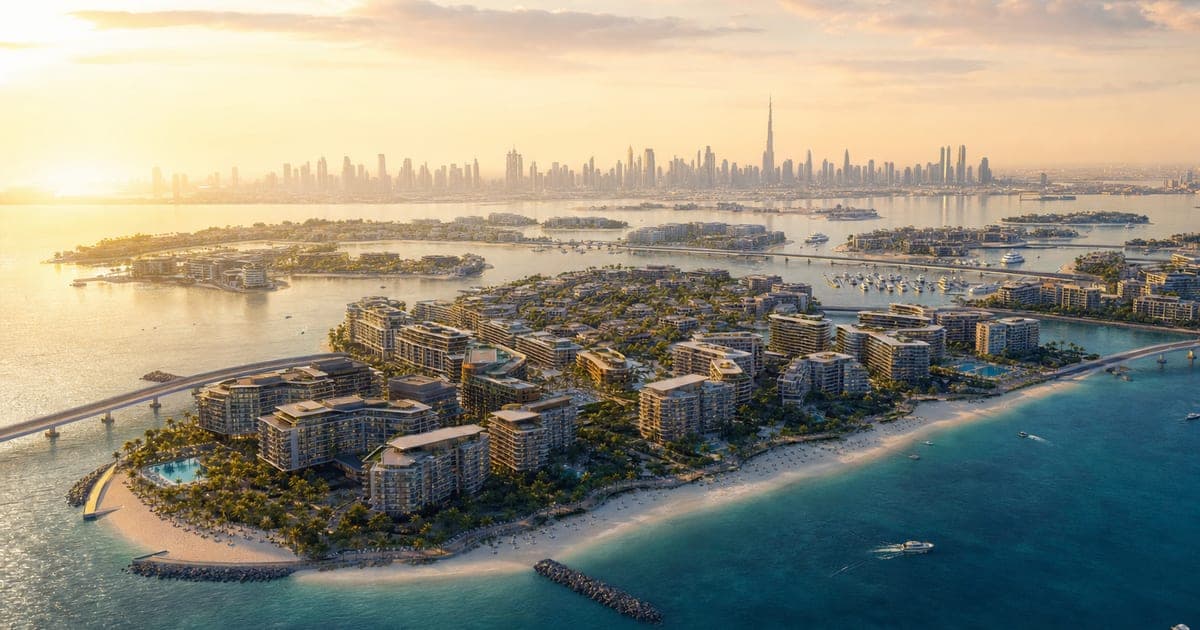
Within that bigger off-plan story, Dubai Islands stands out because it is not simply another tower cluster. It is a coastal master plan by Nakheel, positioned around waterfront living, resort hospitality, beaches, promenades, cultural hubs, retail, wellness and leisure. Nakheel describes the destination as five isles: Central Island, Marina Island, Shore Island, Golf Island and Elite Island. Its official project page says the islands offer over 20 kilometres of beaches and are accessible from the mainland by road and sea.
For investors, that combination matters. Dubai has many apartment options, but fewer large-scale waterfront districts with a credible master developer, hospitality component and phased lifestyle infrastructure. That scarcity is why Dubai Islands is now showing up in off-plan sales rankings, particularly among buyers looking beyond the most mature and expensive coastal addresses.
What the May 2026 data actually tells buyers
The most important point is that the market data is encouraging, not conclusive. Dubai Market Watch reported Dubai Islands as the leading apartment area by sales value in May 2026 at AED 1.4 billion. Provident’s May report placed Dubai Islands third among top off-plan areas by sales volume, behind Dubai South and Jabal Ali First. These are strong signals of buyer appetite.
However, different data providers use different filters. Some reports count all property transactions, some focus on residential, and some exclude or include DIFC direct sales, mortgage registrations or specific transaction types. That is why May transaction totals vary between published sources. Serious buyers should not rely on a single headline number. They should compare actual building-level and project-level transactions before making an offer.
Here is the practical read: Dubai Islands is currently benefiting from three forces at the same time. First, the wider Dubai market remains off-plan heavy. Second, waterfront property continues to command a lifestyle premium. Third, buyers are actively searching for the “next” coastal district after established areas have become expensive.
But demand today does not remove delivery risk. In emerging areas, the difference between a strong investment and a frustrating one is usually not the master plan. It is the specific tower, view line, handover timing, service charges, payment plan and future competing supply.
Who should consider buying in Dubai Islands?
Dubai Islands is best suited to buyers who understand phased communities. If you need a fully lived-in neighbourhood today, with schools, supermarkets, restaurants, clinics and a deep ready rental pool already operating around you, a mature area may be more suitable. But if you are comfortable with a medium-term horizon, the district can be compelling.
It may fit these buyer profiles:
- Off-plan investors looking for waterfront exposure before the wider destination is fully complete.
- End-users who want a coastal Dubai lifestyle but may be priced out of Palm Jumeirah, Bluewaters or prime Dubai Marina inventory.
- Holiday-home investors who believe future resort, beach and hospitality infrastructure will support short-stay demand, subject to licensing and building rules.
- Capital-growth buyers willing to hold through construction and early community formation instead of expecting instant liquidity.
- Portfolio diversifiers who already own in mature rental areas and want a longer-cycle waterfront play.
The district is less ideal for buyers who need immediate rental certainty, investors depending on aggressive short-term flipping, or purchasers stretching their cash flow on the assumption that every launch will automatically appreciate before handover.
Key checks before buying off-plan in Dubai Islands
In Dubai Islands, project selection matters more than simply “buying the area.” Waterfront districts can have wide differences in value from one unit to another. A genuine sea view, beach access, low-rise positioning, branded hospitality connection or walkable promenade frontage can change both rental appeal and resale liquidity.
Before reserving a unit, check the following:
- Developer track record: Review completed projects, construction quality, handover history and after-sales responsiveness.
- Escrow and registration: Confirm that the project is properly registered and that payments go through the approved escrow structure.
- View protection: Ask what can be built in front of the unit. A “water view” on a sales brochure is not the same as a protected full sea view.
- Payment plan stress test: Calculate whether you can meet instalments if resale liquidity slows before handover.
- Service charges: Waterfront and resort-style buildings can carry higher operating costs, which affects net yield.
- Handover and snagging: Build in time for completion delays, inspection, snagging and furnishing before rental income begins.
- Exit strategy: Compare similar units already transacting, not just launch prices from sales presentations.
For investors, net yield is the number that matters. A building with impressive amenities can still underperform if the service charge is high, the unit is oversized for rental demand, or many similar apartments hand over at the same time.
How Dubai Islands compares with established waterfront areas
Dubai Islands should not be compared too simplistically with Palm Jumeirah or Dubai Marina. Those areas already have established transport patterns, restaurants, retail, schools nearby, mature landlord data and deep tenant demand. Dubai Islands is earlier in its lifecycle.
That early-stage position is exactly why some buyers are interested. Mature waterfront communities often offer stronger immediate confidence but less obvious entry-price upside. Emerging master plans can offer more growth potential, but only if infrastructure, amenities, hospitality, beach access and community occupancy develop as expected.
For a buyer choosing between Dubai Islands and an established community, the decision should come down to time horizon. If the goal is immediate income with fewer unknowns, ready property in Dubai Marina, JBR, Business Bay, Downtown Dubai or Palm Jumeirah may be easier to underwrite. If the goal is early exposure to a new waterfront district, Dubai Islands offers a more future-facing thesis.
Location also matters. Nakheel’s official information highlights proximity to Gold Souq Metro Station, Dubai International Airport, Dubai Frame, Dubai World Trade Centre and Downtown Dubai by car. That helps the investment case because Dubai Islands is not isolated at the edge of the city. Still, buyers should test real drive times at peak hours and not rely only on brochure timings.
Practical caveats for 2026 investors
The wider Dubai market is active, but it is also becoming more selective. Cavendish Maxwell’s June 2026 update noted that sales activity softened in May compared with last year and with April 2026. That does not mean Dubai Islands is weak; it means buyers have more reason to negotiate carefully and avoid chasing hype.
One important caveat is supply. In off-plan-heavy areas, multiple developers can launch similar one-bedroom and two-bedroom apartments within a short period. If too many comparable units complete together, rents may take time to stabilise. Investors should therefore avoid buying the most generic layout at the highest price simply because the district is trending.
Another caveat is liquidity. Waterfront off-plan property can attract strong attention at launch, but resale demand before handover depends on market sentiment, payment-plan progress and whether new launches offer better incentives. If your investment case requires selling quickly before completion, you need a conservative backup plan.
Finally, do not ignore end-user fundamentals. The best long-term units are usually the ones people genuinely want to live in: sensible layouts, usable balconies, parking, views, beach or promenade access, quality finishes and convenient building management. In a maturing market, livability protects value better than a fashionable launch story.
Conclusion: a promising waterfront play, but buy with discipline
Dubai Islands is one of the clearest new signals in Dubai real estate data from May 2026. Leading apartment sales value for the month and ranking among top off-plan areas shows that buyers are already taking the district seriously. The appeal is easy to understand: scarce waterfront land, a Nakheel master plan, beach-led lifestyle positioning and access to older Dubai as well as the wider city.
But the right strategy is not “buy anything in Dubai Islands.” It is to compare projects, verify transaction evidence, stress-test payment plans and choose units with real end-user appeal. For buyers and investors who want to understand whether a specific Dubai Islands apartment fits their budget, risk tolerance and exit plan, BrokeryHero can help turn the headline into a practical property decision.
Sources
- ZAWYA: Dubai residential property sector secures almost 67,000 sales from January to May 2026 – Cavendish Maxwell
- Dubai Real Estate Market Report May 2026 by Provident
- Dubai Real Estate Market – May 2026 Overview
- Dubai Islands Waterfront Living & Luxury Properties | Nakheel
- Nakheel awards new AED 2.6 billion contract to develop Bay Villas community at Dubai Islands
Stay in the loop
Get the latest articles delivered every week.
By subscribing, you agree to receive blog updates. Unsubscribe anytime.
More from this category
Oct 19, 2026
Oct 14, 2026

Oct 12, 2026
Oct 9, 2026
Oct 7, 2026
Oct 5, 2026

Oct 2, 2026

Sep 30, 2026

Sep 28, 2026
Sep 25, 2026