Dubai Properties
Emaar’s AED 200B Dubai Masterplan: What Buyers Should Watch Before the Full Launch
Florian
•June 17, 2026
Search intent: buyer guide and investor insight. Emaar’s 11 June 2026 announcement that it is preparing to unveil an AED 200 billion master-planned development in the heart of Dubai is not just another off-plan headline. If delivered as described, it would add a major mixed-use urban district with more than 4.5 million square metres of gross floor area and capacity for nearly 150,000 residents.
For Dubai property buyers, investors and relocating families, the important question is not simply “Should I buy?” It is: what should be true before this becomes a smart purchase? The project is still in the pre-launch stage, and the exact location, phasing, pricing, service charges, handover dates and inventory mix have not all been fully disclosed. That makes this the moment for disciplined due diligence, not FOMO.
What Emaar Has Announced So Far
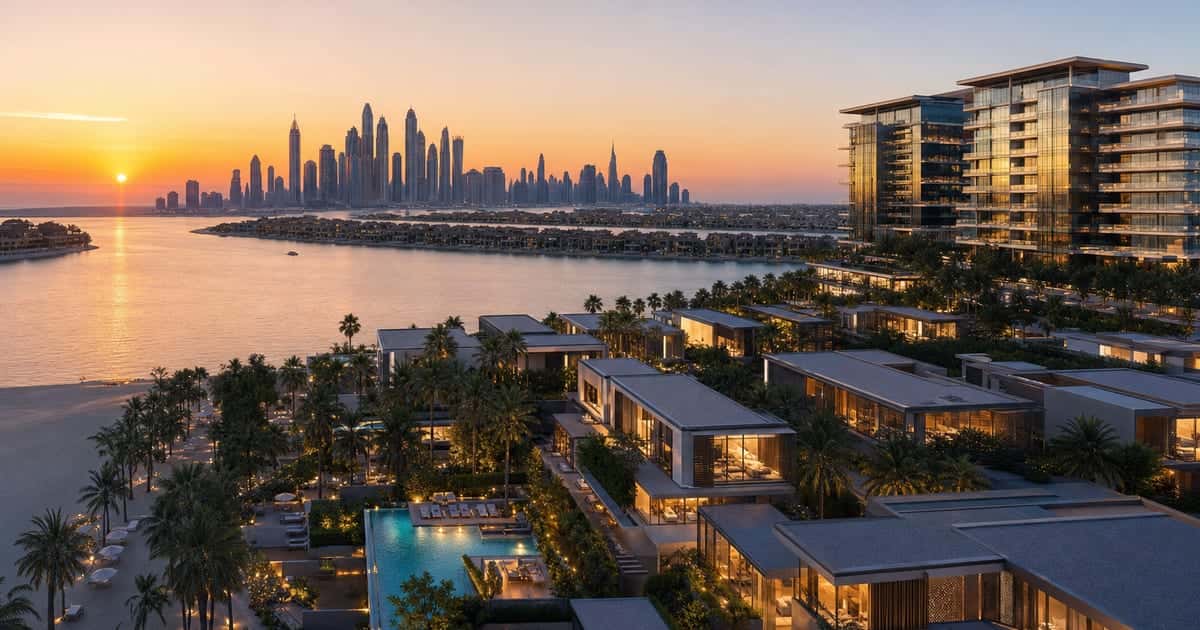
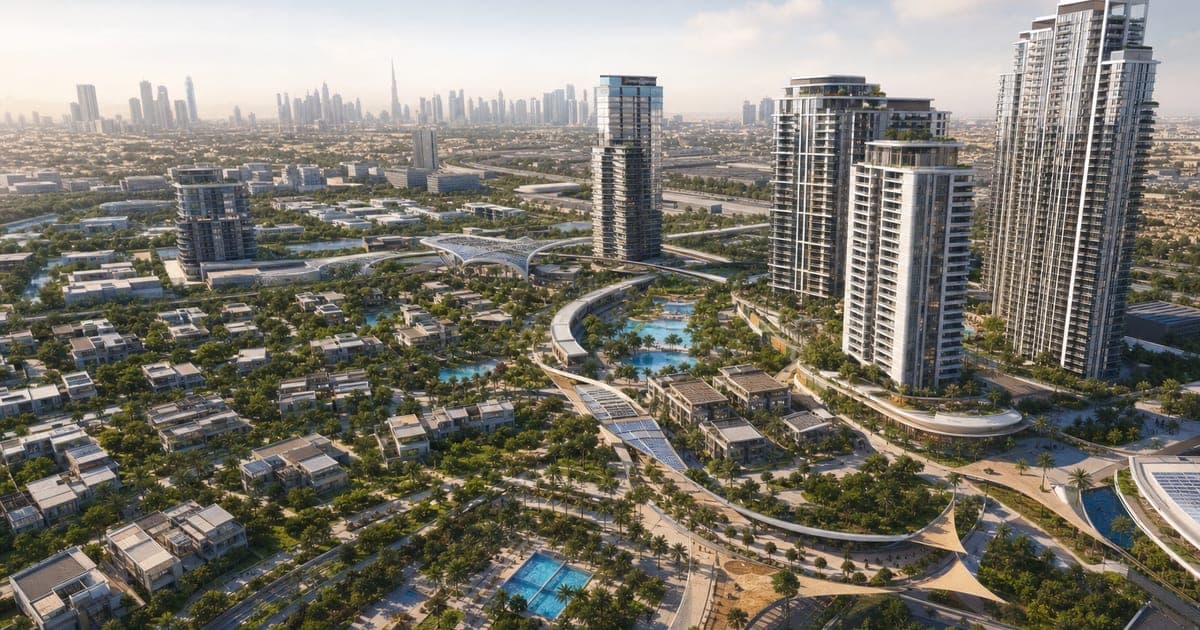
Emaar says the forthcoming masterplan will be a large, self-sustaining urban district with residential towers, signature villas and mansions, Grade-A offices, retail, hospitality, civic and cultural amenities. The company has positioned it as a generational development and one of its most ambitious projects to date.
Regional media coverage adds that the community is expected to follow “20-minute city” principles, with proposed metro connectivity, schools, healthcare, parks, smart technology and sustainable transport options. That language matters because Dubai buyers increasingly pay a premium for complete communities, not isolated towers.
Still, buyers should separate announced vision from purchase-ready information. Before paying an expression of interest or signing a booking form, you should know the plot location, RERA registration status, escrow details, payment plan, anticipated service charges, unit sizes, view corridors, construction phasing and whether key infrastructure is guaranteed or only proposed.
Why This Is a Big Deal for Dubai Real Estate
Dubai’s real estate market is already deep into a more mature 2026 cycle. DLD reported AED 252 billion in total real estate transactions in Q1 2026, up 31% year on year, with 60,303 real estate transactions recorded during the quarter. That shows strong capital flow, but it also means buyers are entering a market where selectivity is more important than simply buying any branded off-plan unit.
An Emaar mega-district can influence the market in several ways. First, it can pull buyer attention away from smaller off-plan launches in secondary locations. Second, it can reset expectations for master community design, especially if the project offers real walkability, office demand, schools, retail and transport access. Third, it can create a new benchmark for branded Dubai living, similar to how Downtown Dubai, Dubai Hills Estate and Dubai Creek Harbour shaped buyer preferences in earlier cycles.
The risk is that early demand can push prices ahead of fundamentals. If first releases are priced aggressively because of the Emaar name, investors need to underwrite future resale and rental value using realistic comparisons, not launch-day enthusiasm.
What Buyers Should Check Before Paying an EOI
For end-users, the opportunity is obvious: a new Emaar master community in central Dubai could offer long-term lifestyle value, especially if it combines homes, offices, schools, parks and mobility in one district. But the first phase is not always the right phase for every buyer.
Before committing, ask these questions:
- Where exactly is the plot? “Heart of Dubai” is not enough for a property decision. Commute time to DIFC, Business Bay, Downtown Dubai, Dubai Marina, Dubai Hills and the airport will materially affect value.
- What is confirmed versus proposed? Metro connectivity, schools, healthcare and retail can transform a community, but only if they are included in binding plans and delivered in useful phases.
- How much usable space are you getting? Compare net internal area, balcony size, layout efficiency and parking allocation, not only price per square foot.
- What is the handover timeline? A beautiful masterplan with a long build horizon may not suit a family that needs to move in within two years.
- What are the service charges likely to be? Large amenity-rich districts can be attractive, but high recurring costs can reduce net yield and resale appeal.
- Is the payment plan affordable under stress? Assume income changes, currency movement, mortgage rate shifts and possible resale illiquidity before handover.
For families relocating to Dubai, the practical decision may come down to timing. If the first handovers are years away, renting in established communities such as Dubai Hills Estate, Arabian Ranches, Jumeirah Village Circle, Downtown Dubai or Dubai Creek Harbour may be more sensible while monitoring the project’s progress.
Investor Angle: Premium Brand, But Do Not Ignore Supply
Emaar launches often attract global buyers because the developer has a track record of creating recognizable Dubai communities. That brand strength can support resale liquidity, particularly for well-located units with strong views, efficient layouts and early-phase pricing.
However, investors should not treat every unit equally. A one-bedroom apartment in a large tower, a family townhouse, a villa facing a park and a mansion in a gated enclave are different investment products. They have different tenant pools, holding costs, exit strategies and sensitivity to future supply.
Dubai’s broader off-plan market remains active, but more inventory is competing for attention. REIDIN’s April 2026 launch tracker recorded 8 residential project launches totaling 1,465 units, with apartments accounting for 70% of launched inventory and villas 30%. That snapshot is useful because it shows buyers are not short of options. The Emaar project may be special, but it still has to compete with other Dubai off-plan communities on price, location, handover confidence and rental fundamentals.
Investors should model three scenarios: a conservative rental yield after service charges, a flat resale market at handover, and a delayed infrastructure timeline. If the investment only works under a best-case appreciation story, it is probably too fragile.
How the 20-Minute City Idea Could Affect Property Value
Dubai’s 2040 planning direction places heavy emphasis on integrated communities, sustainable mobility and reducing daily travel time. The official Dubai 2040 “20 Minutes City” initiative describes a model where residents can access a high share of daily needs within a 20-minute walking or cycling timeframe, supported by public transport and integrated service centres.
If Emaar’s district genuinely delivers this, it could be meaningful for property values. Walkability, shaded public spaces, schools, clinics, supermarkets, offices and transit access can increase tenant stickiness. That matters in Dubai, where many tenants move quickly when a community lacks convenience or when commuting becomes painful.
But buyers should be careful with the phrase “20-minute city.” In Dubai, real-world value depends on climate-aware design, shaded routes, last-mile transport, parking logic, road access and whether essential services open before residents move in. A masterplan render does not guarantee daily convenience.
Practical Strategy: Who Should Wait and Who Should Move Early?
Move early if you understand Emaar launches, can assess floor plans quickly, have cash ready, and are targeting scarce inventory such as prime-view units, larger family layouts or villas. Early phases can sometimes offer the best selection, but only if pricing leaves room for future value.
Wait for more clarity if you are a first-time Dubai buyer, need mortgage certainty, are comparing rent versus buy, or do not yet know the exact location and infrastructure phasing. Paying a premium before key details are released can limit your negotiation power later.
Be extra cautious if you are buying purely to flip before handover. In a more selective 2026 market, liquidity can be uneven. The safest off-plan positions are usually those with strong end-user appeal, realistic payment plans and a clear reason why a future buyer or tenant would prefer that unit over competing stock.
Conclusion: Big Opportunity, Bigger Due Diligence
Emaar’s AED 200 billion Dubai masterplan is one of the most important property stories of June 2026 because it could create a new benchmark for mixed-use living in the emirate. But the smartest buyers will not chase the headline alone. They will wait for confirmed location details, compare launch pricing against established Dubai communities, stress-test the payment plan and focus on units with real end-user demand.
BrokeryHero’s view is simple: treat this as a major market signal, not an automatic buy signal. The right unit in the right phase could be compelling. The wrong unit bought on hype could be expensive patience.
Sources
- Emaar Prepares to Unveil Its Most Ambitious Masterplan Ever in heart of Dubai
- Emaar set to unveil AED 200 billion Dubai mega-development
- Dubai’s real estate transactions surge 31% to reach AED 252 billion in Q1 2026
- Dubai Residential Project Launch Tracker – April 2026
- The 20 Minutes City - Dubai 2040 Urban Master Plan
Stay in the loop
Get the latest articles delivered every week.
By subscribing, you agree to receive blog updates. Unsubscribe anytime.
More from this category
Sep 9, 2026
Sep 7, 2026
Sep 4, 2026
Sep 2, 2026
Aug 31, 2026
Aug 28, 2026

Aug 17, 2026

Aug 14, 2026
Aug 12, 2026
Aug 10, 2026